The search for quality infant care in Sherman Oaks is one of the most meaningful decisions a parent will make in their child’s first year. It’s not about finding a place to leave your baby — it’s about choosing the people and environment that will shape how your child experiences the world before they can tell you about it.
The good news: the right program has clear, observable markers. Here’s what to look for.
1. Licensing and Accreditation That Actually Means Something
A valid state license is the floor, not the ceiling. In California, early education programs must comply with the Department of Social Services’ Community Care Licensing guidelines — covering everything from staff-to-infant ratios to emergency preparedness.
Beyond licensing, look for programs that carry accreditation from NAEYC (the National Association for the Education of Young Children). Accreditation signals that a program has been independently evaluated against rigorous standards in curriculum, caregiver training, and environment. It’s one of the most reliable indicators of quality.
2. Caregiver Qualifications and Consistency
The most important variable in any infant care program isn’t the building — it’s the people. At minimum, caregivers should hold early childhood education credentials, current CPR and first aid certification, and demonstrated experience with infants specifically.
Equally important: consistency. High staff turnover is a significant red flag. Infants build trust through repeated, responsive interactions with familiar faces. A program that struggles to retain its educators can’t offer that.
Ask directly: How long have your infant caregivers been here? What does ongoing professional development look like for your team?
3. Infant-to-Caregiver Ratios That Allow for Real Attention
A low ratio isn’t a luxury — it’s a developmental necessity. For infants, most child development experts recommend no more than three to four babies per caregiver. Anything higher makes it structurally impossible for caregivers to respond promptly to every child’s individual cues.
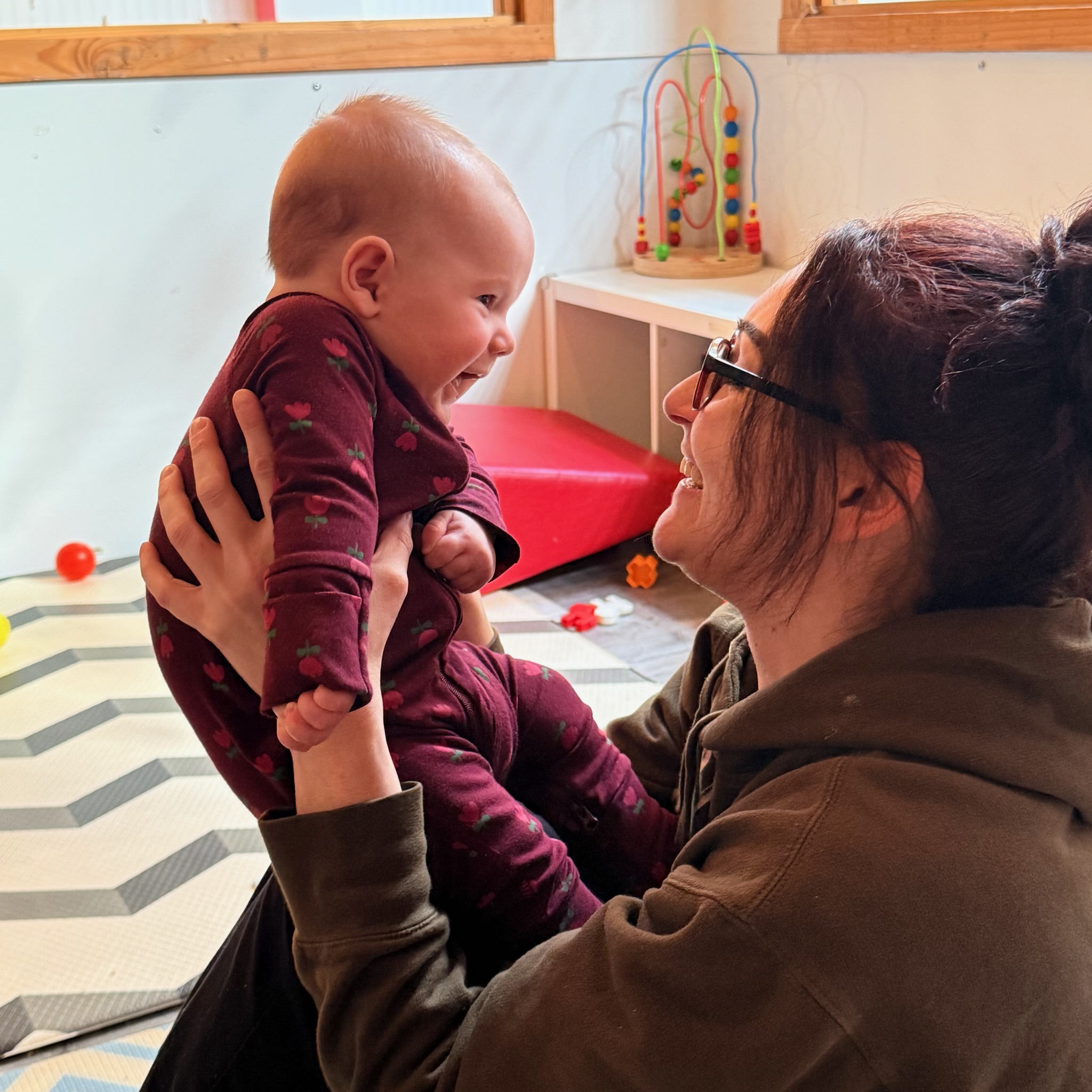
When touring, observe how the room actually operates. Are caregivers engaged and present, or managing chaos?
This is the kind of attentive, relationship-centered care that defines the infant and toddler program at WeVillage. Explore our programs →
4. Safe Sleep and Health Protocols
Infant safety standards are non-negotiable. Every reputable program should follow the American Academy of Pediatrics’ safe sleep guidelines — babies placed on their backs, firm mattresses, cribs clear of soft items.
Beyond sleep, ask about daily hygiene routines: how toys are sanitized, how changing areas are managed, how sick children are handled. These protocols protect your baby and signal how seriously the program takes operational care.
5. A Genuinely Nurturing Environment — Not Just a Safe One
Safety is the baseline. What distinguishes excellent infant care is what happens beyond it.
Look for caregivers who make eye contact, use their voice with intention, and respond to a baby’s cues before the crying escalates. Responsive caregiving — the kind that sees and meets each child’s needs consistently — builds secure attachment, and secure attachment is foundational to everything that follows: language acquisition, emotional regulation, social confidence.
The physical environment matters too. Spaces designed for infants should feel calm, organized, and sensory-rich in a measured way. Think natural light, soft textures, and developmentally appropriate materials — not overstimulating clutter.
6. Communication That Keeps You in the Loop
You should never have to wonder what your baby’s day looked like. Quality programs provide consistent, detailed updates — naps, feedings, diaper changes, milestones, and moments worth sharing.
Ask about their communication tools and frequency. An open-door policy — meaning you can visit anytime — is a sign of a program with nothing to hide and everything to be proud of.
7. A Philosophy That Matches Your Values
The best infant care programs aren’t interchangeable. They have a point of view about how babies learn, how families are supported, and what community means. Before enrolling, take the time to understand the program’s educational philosophy and whether it resonates with how you think about your child’s development.
Early education should never feel like supervised waiting — it should have intention behind it.
Ready to see what thoughtful infant care looks like in person? Schedule a tour at WeVillage →
Your village is waiting. WeVillage is early education designed for modern families in Sherman Oaks — from infants through school age, with programs built around how your child actually grows. Schedule a Tour →