The first time you leave your infant in someone else’s care, you’re not just handing over a diaper bag. You’re handing over your trust. For parents exploring infant care in Sherman Oaks, understanding exactly how a program handles the fundamentals — feeding, naps, and diapering — is one of the most reliable ways to measure whether a center is truly equipped to care for your child.
Here’s what that looks like when it’s done right.
1. Feeding Is Treated as a Relationship, Not a Schedule
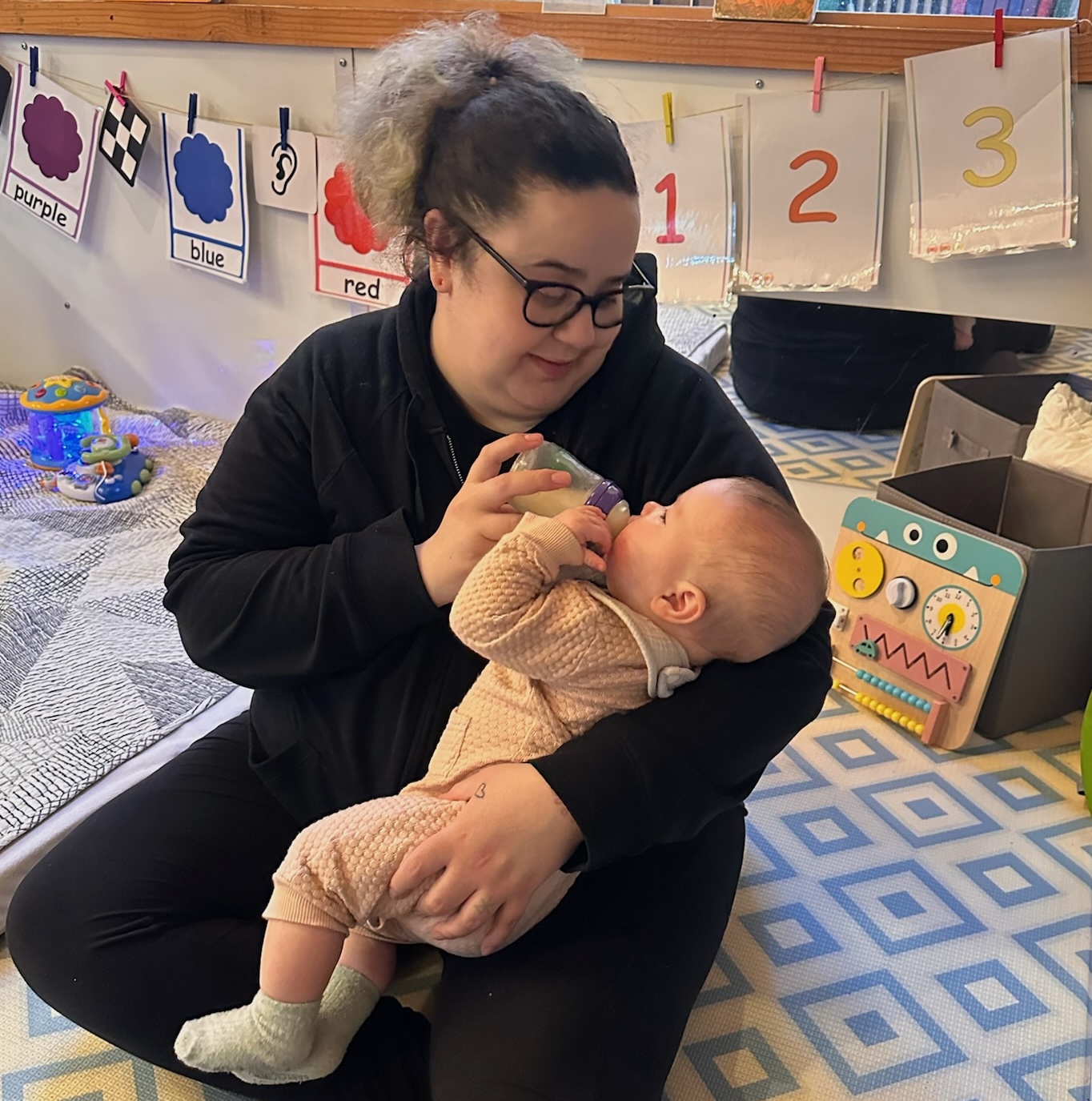
Quality infant programs don’t just fill bottles on a timer. They practice what the American Academy of Pediatrics calls responsive feeding — watching for hunger and fullness cues rather than enforcing a rigid routine. That means a caregiver who notices your baby turning away from the bottle, or rooting before the “scheduled” feeding time, and responds accordingly.
For breastfeeding families, bottles are labeled, stored at safe temperatures, and warmed in water baths — never microwaved. For formula-fed infants, preparation follows FDA and CDC guidelines with careful attention to hygiene and water safety. Parents receive daily feeding logs so nothing is guesswork.
As infants begin transitioning to solids, allergen introduction is managed in close partnership with families — never without consent or an emergency plan in place.
2. Nap Safety Is Non-Negotiable — and Documented
Safe sleep at a quality center looks exactly like what the AAP recommends for home: firm mattresses, fitted sheets, no loose items in the crib. Caregivers conduct regular check-ins during every nap and document sleep duration for the daily parent report.
What doesn’t happen: unsupervised nap time, blankets tucked around infants, or a one-size-fits-all sleep schedule. Every baby has a natural rhythm, and skilled caregivers follow it — adjusting for the baby who needs a third nap on a hard day, or the one who’s ready to drop to two.
Ready to see how infant care at WeVillage is structured? Schedule a tour and meet the team in person.
3. Diapering Follows a Strict, Sanitary Protocol
Every diaper change at a quality center follows the same sequence: hand-washing, gloves, a dedicated changing station with a disposable liner, a clean change, surface sanitation, and hand-washing again. Dedicated diapering areas with sealed waste bins and sink access keep cross-contamination risk low.
Frequency matters too. Checks happen at minimum every two hours — sooner if needed. Caregivers monitor for rashes and apply parent-approved ointments when necessary. All of this is logged and shared with families daily.
4. Communication Is Built Into the Program — Not an Afterthought
Strong infant care centers don’t make parents wait until pickup to find out how the day went. Daily reports covering feeding amounts, nap times, diaper changes, and developmental moments are standard. Many programs use apps that let parents check in throughout the day.
This level of transparency isn’t a nice-to-have — it’s a signal of program quality. A center that communicates proactively is a center that’s paying attention.
5. Routines Are Consistent, but Schedules Are Flexible
The best infant care programs balance group structure with individual responsiveness. A consistent daily rhythm helps infants feel secure; a flexible schedule honors the fact that no two babies are the same on any given day.
If your family’s work schedule changes week to week, that same flexibility should extend to your enrollment. At WeVillage, FlexCare was designed specifically for modern families who need a program that adapts — without sacrificing the consistency and quality that infants need to thrive.
What to Look for on a Tour
When you visit an infant program, ask to see the feeding logs, the sleep documentation, and the diapering station setup. Ask how caregivers communicate with families during the day. Ask what happens when a baby’s schedule shifts.
The answers tell you everything you need to know about whether a center treats care as a routine task — or as a genuine professional practice.
Your village is waiting. WeVillage is early education designed for modern families. Schedule a Tour →