Every parent has stood in the doorway at 7am, trying to decide: does this child need rest, or are they fine to go? Knowing when to keep a child home from preschool isn’t always obvious — and the stakes feel high on both sides. This guide cuts through the guesswork with clear, pediatrician-aligned guidance you can actually use.
The Foundation: Why It Matters Beyond Your Own Child
A sick child in an early education classroom doesn’t just affect their own day. Young children share materials, sit close together, and are still mastering the basics of handwashing and cough covering. One contagious illness can move through an entire classroom within days — affecting children with developing immune systems, teachers, and families across the community.
This is one of the ways a preschool community functions like a village: everyone’s choices shape the whole. At WeVillage, our illness policies are built around that shared responsibility.
Ready to see how we think about community care in person? Schedule a tour →
The 7 Signs to Watch For
1. Fever of 100.4°F or Higher
The threshold is consistent: the CDC defines fever as 100.4°F (38°C) or above. Your child should be fever-free for a full 24 hours — without fever-reducing medication — before returning to school. This applies even if they seem to feel better.
2. Vomiting or Diarrhea in the Past 24 Hours
One episode might be an isolated event. More than one is a clear signal. The 24-hour symptom-free rule applies here too. Stomach bugs spread easily in group settings, and a child’s body needs time to recover before they’re truly ready for the day.
3. A Rash That Hasn’t Been Diagnosed
Unexplained rashes — especially those appearing with other symptoms — can indicate conditions like hand, foot, and mouth disease or chickenpox, both highly contagious in early childhood. Get a diagnosis before sending them back. Most preschools require clearance after contagious skin conditions, and for good reason.
4. Pink, Sticky, or Crusty Eyes
Clear, watery eyes from allergies are different from the red, sticky presentation of conjunctivitis. If the eye looks irritated and there’s discharge, assume it’s contagious until a doctor says otherwise.
5. Significant Fatigue or Unusual Irritability
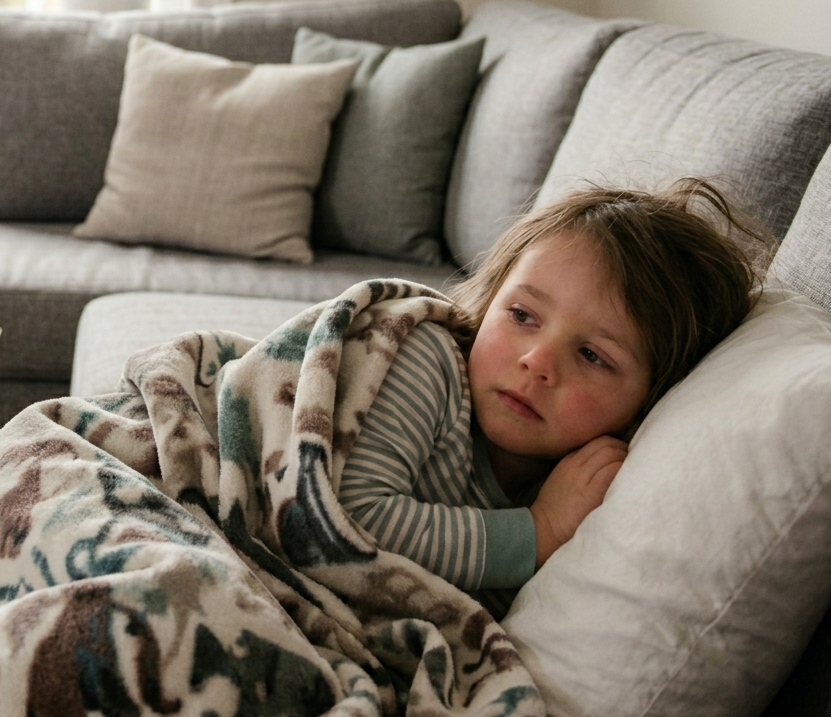
A child who is lying on the couch at 7am, refusing to eat, or crying more than usual may not have a measurable symptom — but their body is telling you something. Behavior-based cues are often the earliest signal that something is off. Trust them.
6. A Deep, Productive Cough or Labored Breathing
Clear runny noses with no other symptoms are usually fine. But a cough that sounds deep or wet, or any sign of difficulty breathing, warrants a closer look before sending a child into a group setting.
7. Contagious Illness With an Active Window
Some conditions come with specific return criteria. The American Academy of Pediatrics recommends keeping children home for at least 24 hours after starting antibiotics for strep throat (and until they’re feeling better), and until all chickenpox blisters have crusted over. When in doubt, call your pediatrician — and check your preschool’s specific policy.
When It’s Fine to Send Them
Not every sniffle is a sick day. A child with mild, clear nasal congestion who is eating normally, sleeping well, and acting like themselves is generally ready for school. Seasonal allergies that produce consistent, predictable symptoms without fever usually don’t require absence.
The simplest test: is your child acting like themselves? Energetic, eating, engaged — those are signs they’re ready.
A Quick-Reference Guide for Common Scenarios
| Symptom | Stay Home? | Return Criteria |
|---|---|---|
| Fever 100.4°F+ | Yes | 24 hours fever-free without medication |
| Vomiting | Yes | 24 hours symptom-free |
| Diarrhea | Yes | 24 hours symptom-free |
| Pink eye (sticky/red) | Yes | Doctor clearance |
| Mild runny nose, no fever | Usually no | Acting normally |
| Strep throat | Yes | 24 hours on antibiotics + feeling better |
| Hand, foot, and mouth | Yes | All blisters dried and crusted |
| Seasonal allergy symptoms | Usually no | No fever, acting normally |
What to Tell Your Preschool
When you call to report an absence, keep it brief and clear: your child’s name, the symptom, when it started, and when you expect to be back. Most schools appreciate knowing the likely diagnosis so they can watch for signs in other children. A message like: “Hi, this is [Name]. [Child’s name] has had a fever since last night — we’ll follow the 24-hour rule and keep you posted” gives teachers everything they need.
Understanding your school’s return policy after illness is part of being a WeVillage community member. You can find full details when you explore our programs and policies →.
Your village is waiting. WeVillage is early education designed for modern families — built around belonging, flexibility, and curriculum that actually works. Schedule a Tour →