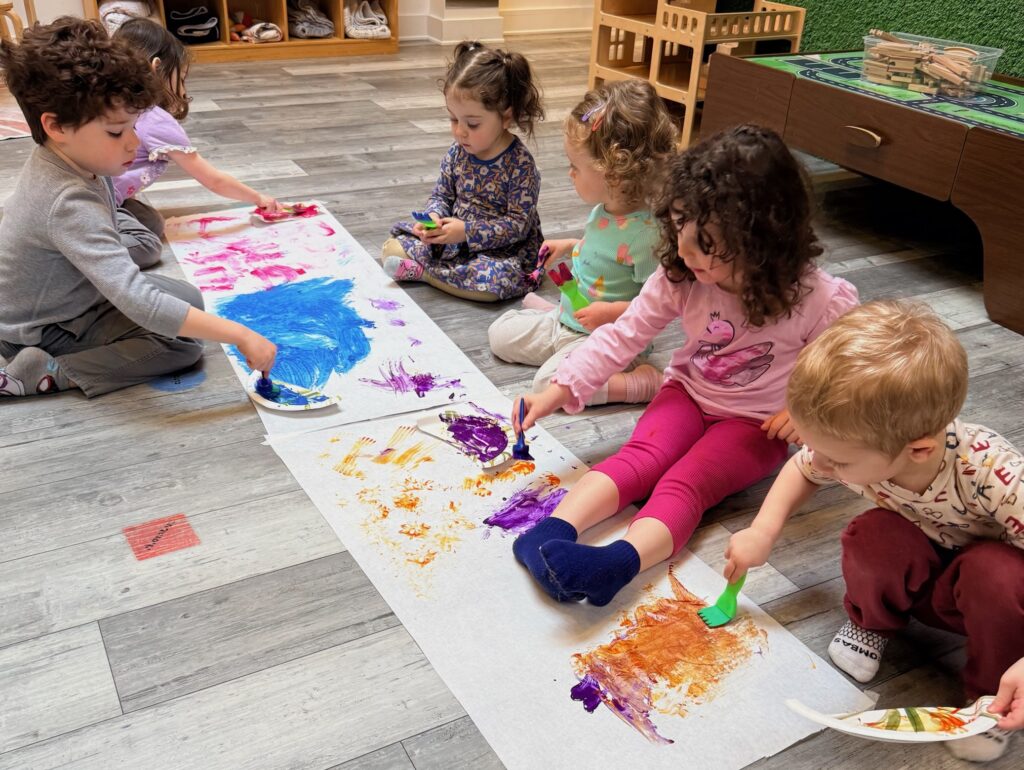
The research is clear: the thinking habits children develop before age five shape how they approach challenges for years to come. At WeVillage, building critical thinking in preschool isn’t a weekly activity on the schedule — it’s woven into every block tower, every messy art project, and every moment a teacher kneels down and asks, “What do you think will happen next?”
Here’s what that actually looks like in our classrooms.
1. Play-Based Learning That Puts Children in the Driver’s Seat
Young children don’t learn best when they’re directed — they learn when they’re curious. The NAEYC has documented extensively that open-ended play is one of the most effective environments for developing executive function and early reasoning skills.
At WeVillage, our teachers observe before they intervene. When a block tower falls for the third time, we don’t rebuild it for them — we ask, “What could we try differently?” That pause is where real learning lives.
2. Open-Ended Questions Over Quick Answers
One of the most powerful tools a teacher has is the ability to not answer. When a child asks why something happened, the instinct is to explain. We resist that instinct.
Instead, our educators use questions that invite thinking rather than close it down:
- “What do you notice?”
- “Why do you think that happened?”
- “What might you try next?”
A child whose guess turns out to be wrong has still practiced something essential: the willingness to reason out loud and adjust. That’s a skill that carries far beyond preschool.
3. Hands-On Materials That Make Abstract Ideas Concrete
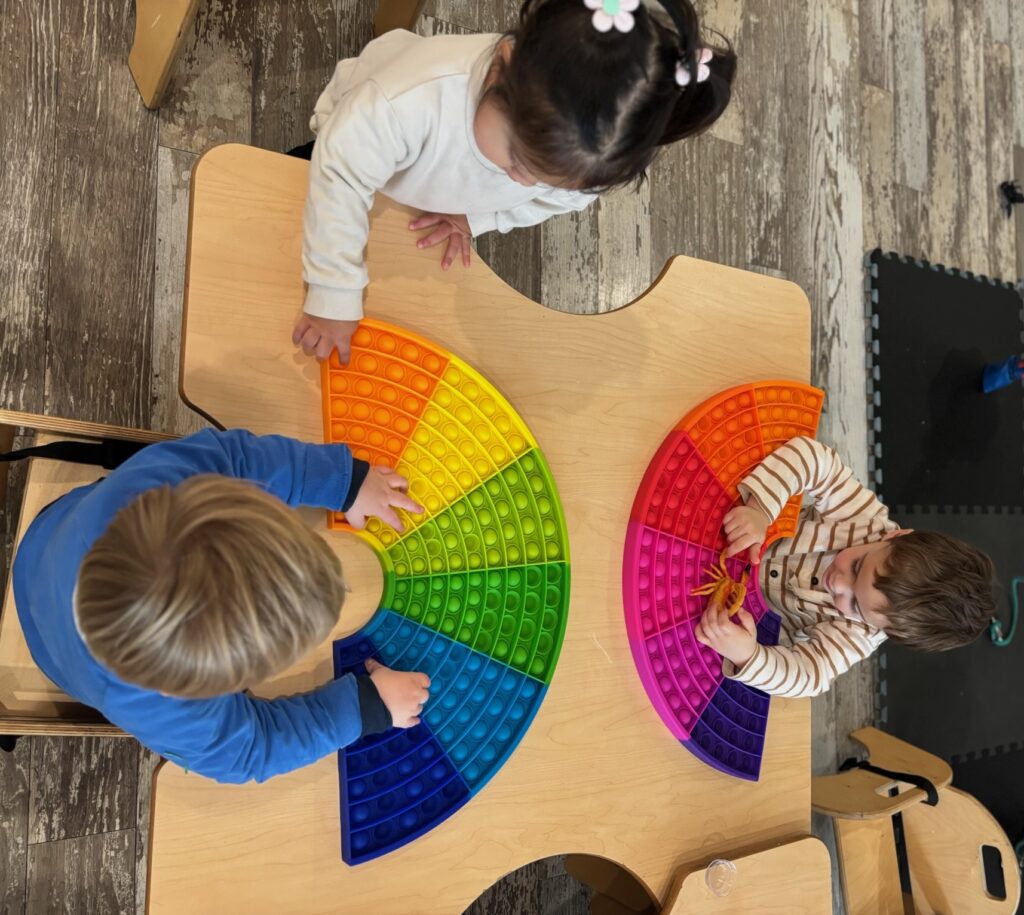
Sorting games. Puzzle challenges. Water tables. Simple science explorations. These aren’t fillers — they’re the curriculum. Harvard’s Center on the Developing Child describes the early years as a critical window for building the neural pathways associated with reasoning, problem-solving, and self-regulation.
Hands-on materials make that development visible. A child who figures out why their bridge keeps collapsing is doing real physics — even if they can’t name it yet.
This is the kind of learning that happens at WeVillage every day. Explore our programs →
4. Storytelling and Perspective-Taking
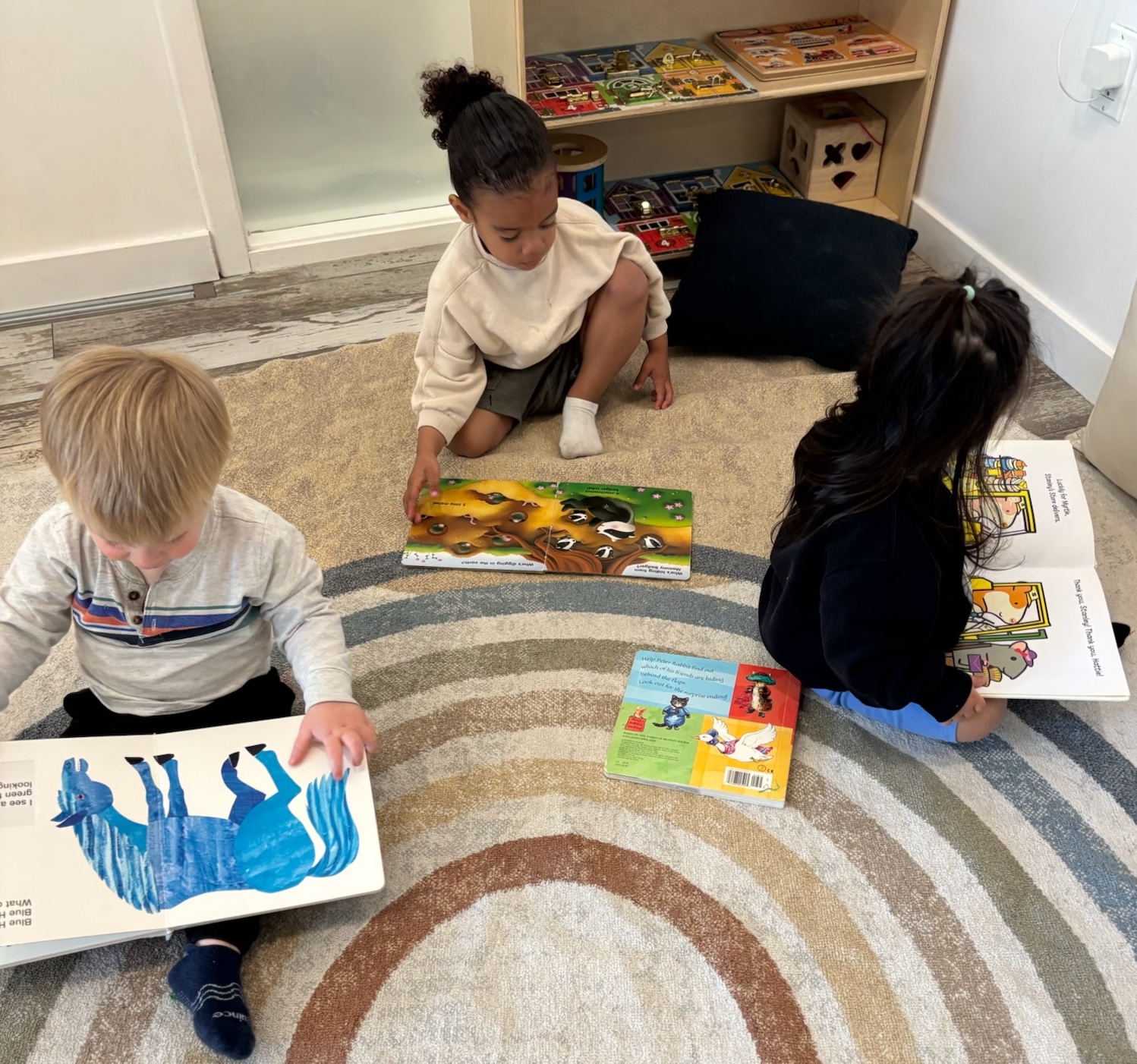
Critical thinking isn’t only about logic — it’s also about the ability to hold more than one perspective at a time. We use books, puppets, and imaginative role-play to help children practice exactly that.
“How do you think your friend is feeling right now?” is a thinking question, not just a social one. Children who develop the ability to consider someone else’s point of view are building the foundation for collaborative problem-solving — one of the most essential skills in any environment they’ll enter.
5. Reflection as a Learning Practice
After a project or group activity, our teachers build in structured time to look back. Not to evaluate what went wrong, but to invite children to assess their own thinking: “What was the hardest part? What would you try differently?”
This practice — what early education researchers call metacognition — is the habit of thinking about thinking. Children who develop it early are better equipped to learn from experience, adapt to new challenges, and keep going when something doesn’t work on the first try.
What This Looks Like at WeVillage
Critical thinking in preschool doesn’t require special materials or complicated lesson plans. It requires a classroom environment designed to invite curiosity — and teachers trained to respond to it.
At WeVillage, our Reggio-inspired approach is built around exactly that: spaces where children lead, educators who listen, and learning that feels less like instruction and more like discovery.
Your village is waiting. WeVillage is early education designed for modern families in Sherman Oaks. Schedule a Tour →