The research is clear: music and art in preschool do far more than keep young children busy. They build the neural pathways, emotional vocabulary, and problem-solving instincts that shape how children learn for years to come. For families who care deeply about curriculum quality, this isn’t just an enrichment add-on — it’s foundational.
Here’s what the science actually shows, and why it matters when you’re choosing an early education environment for your child.
1. Music Strengthens Memory and Early Math Readiness
Learning rhythm and melody isn’t just musical — it’s mathematical. When children track patterns, count beats, and follow sequences, they’re activating the same neural systems used for early math reasoning. Research consistently links early music exposure to stronger executive function and working memory.
The Harvard Center on the Developing Child identifies executive function as one of the strongest predictors of long-term academic success. Music is one of the earliest ways to build it.
2. Art Builds the Visual Processing Skills Behind Reading
Before children read words, they read shapes. Drawing, tracing, and visual pattern-making train the spatial reasoning and fine motor coordination that directly support pre-literacy development. Holding a crayon, cutting along a line, molding clay — these aren’t crafts, they’re preparation.
3. Creative Expression Develops Emotional Intelligence
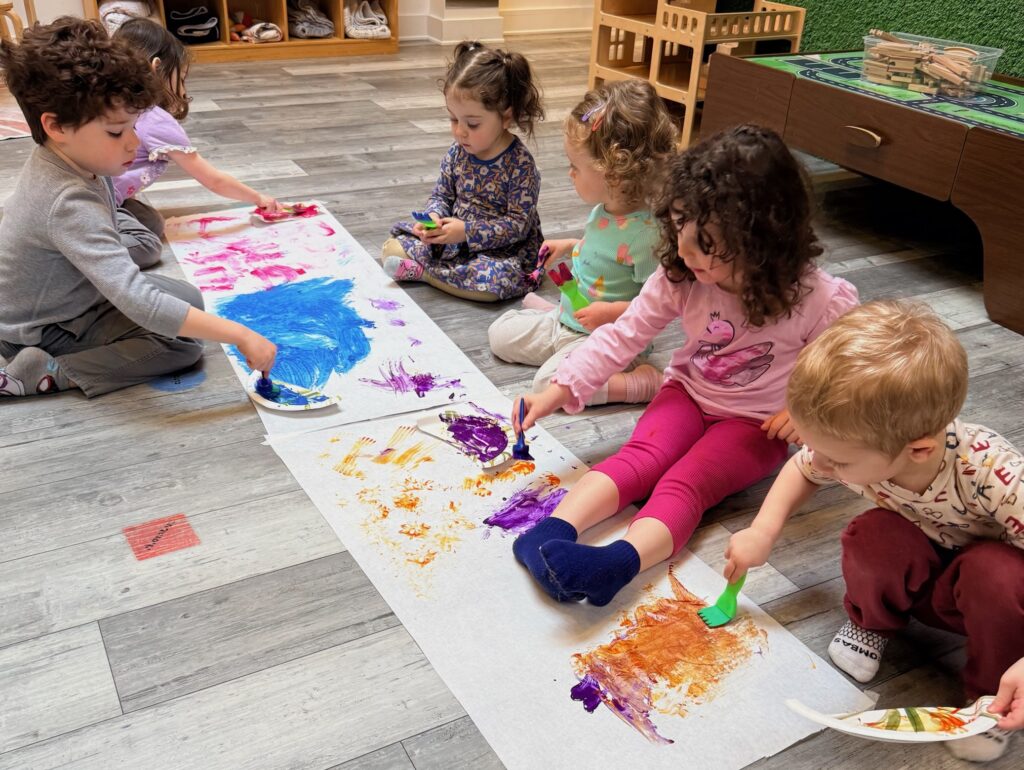
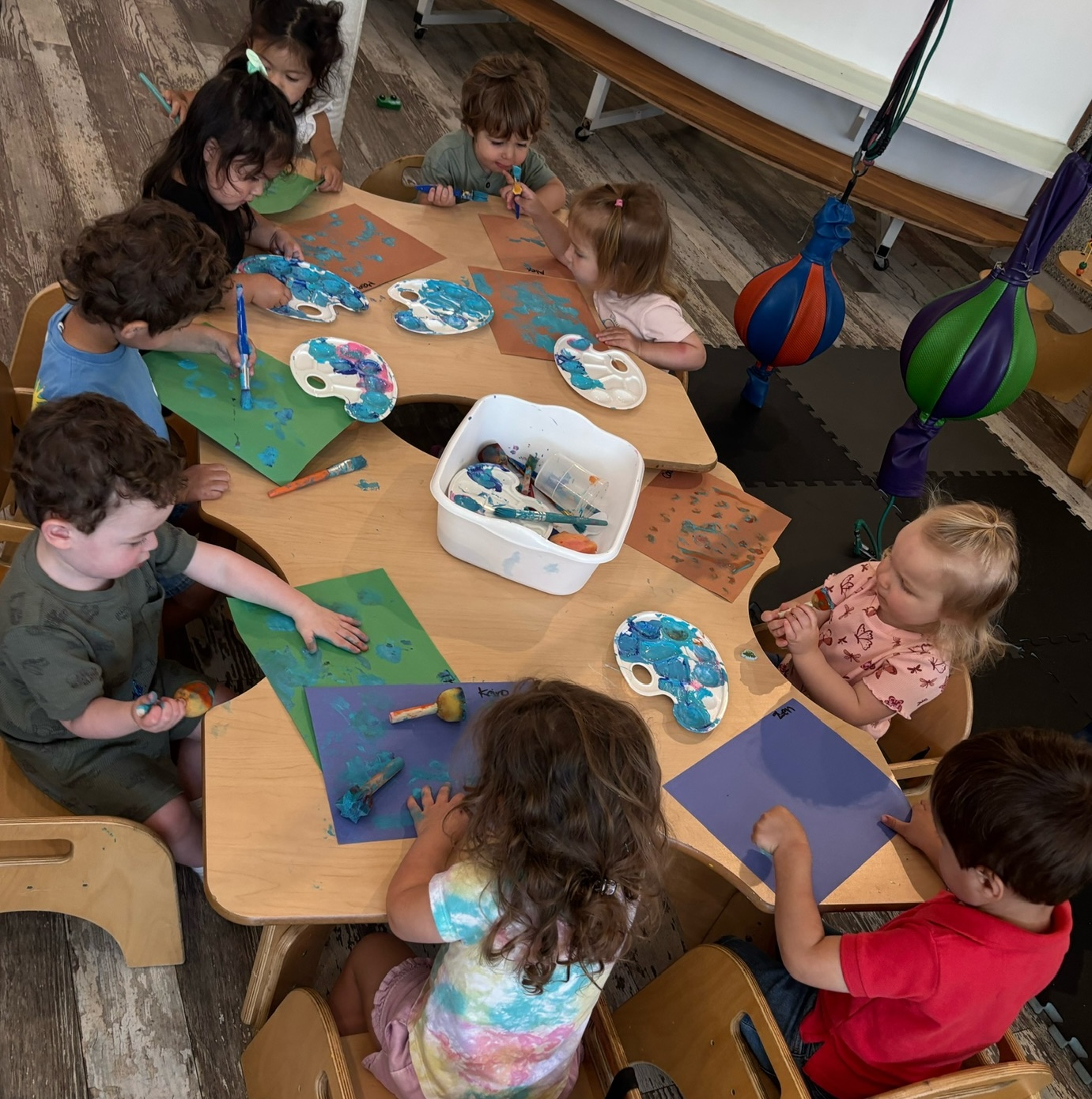
Children don’t always have the words for what they’re feeling. Art gives them a language. When a child paints what they’re experiencing or acts out a story, they’re practicing emotional identification and building the empathy skills that matter enormously in group learning environments.
NAEYC research consistently affirms that arts-integrated classrooms support stronger social-emotional development — the kind that sets children up to thrive, not just academically, but as people.
This is the kind of learning that happens at WeVillage every day. Explore our programs →
4. Music and Art in Preschool Support Language Development
Songs, rhymes, and call-and-response patterns help children hear and manipulate the sounds inside words — a skill called phonemic awareness that’s central to reading readiness. Visual storytelling through art extends this further, giving children ways to communicate complex ideas before they can write them.
Both channels build expressive and receptive language simultaneously. That’s a significant developmental return.
5. Dance and Movement Develop Body Awareness and Coordination
Gross motor development is often overlooked in discussions of curriculum quality — but moving to music teaches children balance, spatial awareness, and physical coordination in ways that structured exercise rarely does. It’s whole-body learning at its most joyful.
6. Creative Activities Support Self-Regulation
Finishing a drawing, following the steps of a song, or waiting for your turn in a music game all require focus, patience, and impulse control. These are precisely the self-regulation skills that predict school readiness. Arts-based learning builds them without the children realizing they’re being asked to practice.
7. Arts Exposure Creates Long-Term Academic Confidence
Children who experience rich creative environments early on tend to approach learning with more confidence and flexibility. They’ve already practiced making choices, recovering from mistakes, and expressing ideas in multiple forms. That disposition — more than any single skill — is what a quality early education environment is designed to cultivate.
When you’re evaluating preschools in Sherman Oaks, the presence of intentional, well-integrated music and art programming is one of the clearest signals of a thoughtfully designed curriculum. It tells you how a school thinks about children — not just what they want kids to know, but how they want them to grow.
At WeVillage, creative development is woven into daily learning because it works. Schedule a tour and see what that looks like in practice.
Your village is waiting. WeVillage is early education designed for modern families. Schedule a Tour →