Preschool readiness isn’t a switch that flips on a child’s third birthday. It’s a constellation of small, observable things — how your child handles a short goodbye, whether they can express that they’re hungry, whether they get absorbed in a puzzle for a few minutes. These signals matter more than the date on a birth certificate.
Most families find the question harder than it should be. Age gives a starting point, but it doesn’t tell the full story. Here’s what early childhood educators actually look for — and how to see it in your own child.
What Preschool Readiness Actually Looks Like
The NAEYC (National Association for the Education of Young Children) describes school readiness as multi-dimensional: emotional, social, physical, language, and cognitive development all play a role. No single domain is the gatekeeper.
That framing matters. A child doesn’t need to check every box — they need to be moving in the right direction across a few of them.
1. They can handle short separations
Tearful goodbyes are completely normal. What educators look for is whether a child can settle — usually within a few minutes — after a parent leaves. Prolonged distress every day is a signal worth noting. A short transition, even an emotional one, is not.
2. They play alongside other children
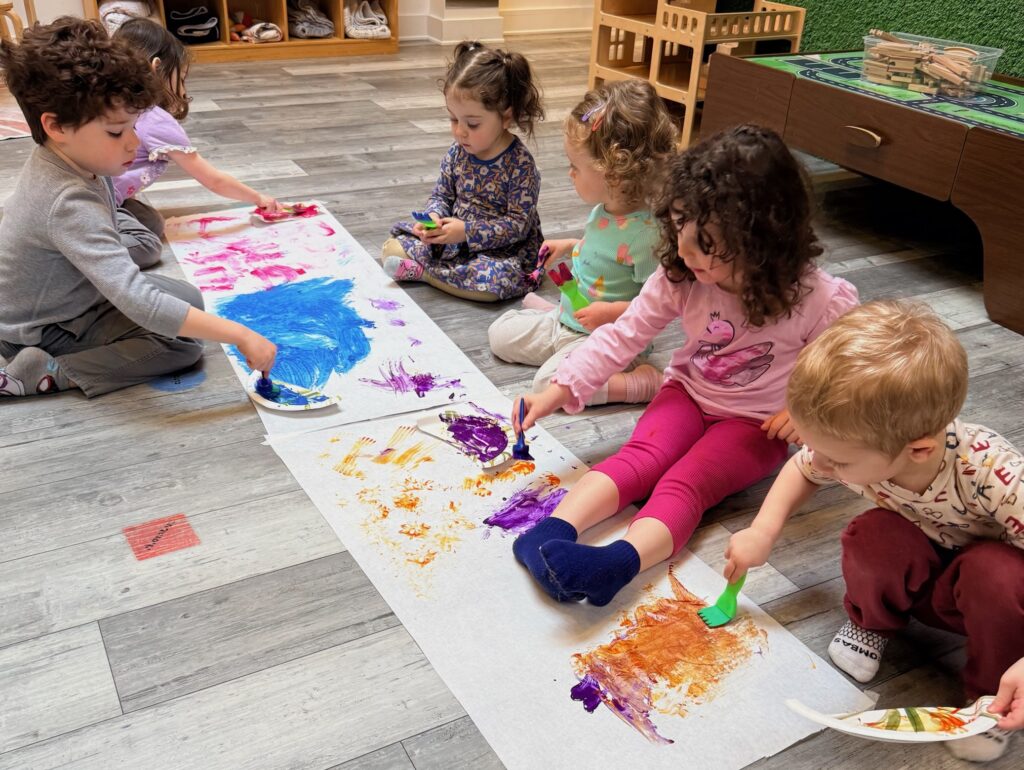
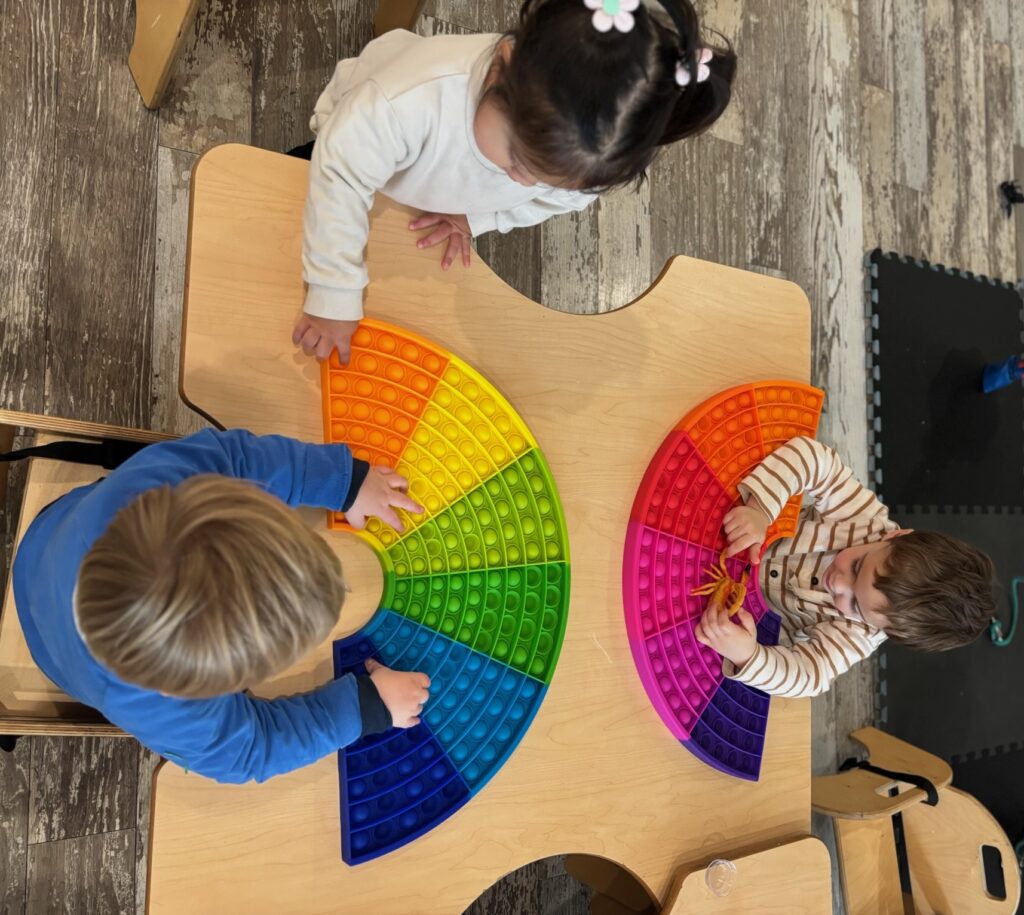
Full cooperative play doesn’t develop until closer to age 4 or 5. What matters at preschool entry is parallel play: a child who can sit near peers, engage in their own activity, and begin to observe and mimic what others are doing. That’s the foundation.
3. They can express basic needs
Your child doesn’t need an advanced vocabulary. They need enough language — words, gestures, or signs — to tell a teacher they’re hungry, tired, or need the bathroom. This ability to communicate basic needs is one of the most practical indicators of preschool readiness, and it makes a real difference in how quickly children settle into a classroom.
4. They show curiosity and focus
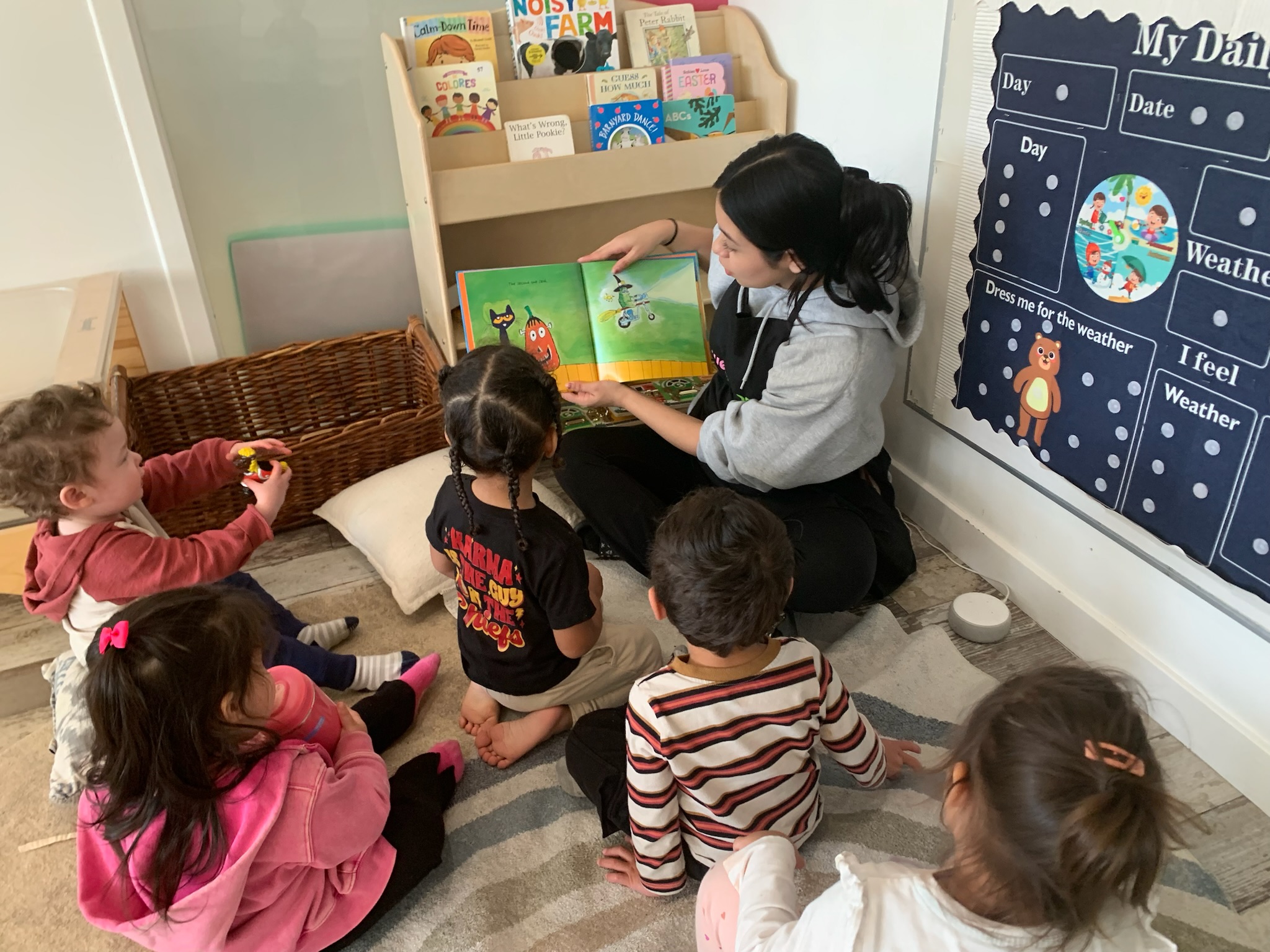
A child who asks questions, gets drawn into books, and can sustain attention on an activity for a few minutes — building, drawing, stacking — is showing the kind of disposition that thrives in early education. The CDC’s developmental milestones for 3–5 year olds offer a useful reference for what to expect at each stage.
5. They’re building basic self-care skills
Preschool classrooms are designed to support independence, not replace it. A child who is working on washing hands, putting on shoes, or cleaning up toys — even imperfectly — is ready to grow those skills in a group setting. Fully mastered self-care isn’t the bar. Active progress is.
This is the kind of development we support every day at WeVillage. Explore our programs →
Age Is a Starting Point, Not a Finish Line
Most children in the U.S. begin preschool between 3 and 5 years old. Some are ready closer to 2.5; others benefit from waiting until 4. Neither path is a failure — it’s a reflection of how differently children develop.
What matters most is whether your child has a genuine opportunity to grow in a structured, warm community. A program that meets children at their developmental stage — rather than a fixed benchmark — makes that transition possible for a much wider range of kids.
How to Support Readiness at Home
If your child isn’t quite there yet, there’s meaningful work to do before day one:
Build predictable routines around meals, wake-up, and wind-down. Consistency at home builds the kind of calm that transfers to a classroom.
Practice short separations. Leave your child with a trusted adult for an hour and come back. Repeat. That pattern — you leave, you return — is exactly what they’ll experience at drop-off.
Encourage independence with small tasks. Letting them put on their own shoes (even slowly) or carry their own backpack signals that they’re capable. That confidence matters.
Read books about preschool and talk openly about what to expect. Naming the experience reduces the unknown.
The Right Environment Makes All the Difference
Preschool readiness is a two-way equation. Yes, your child needs to be ready — but the program needs to be ready for your child, too.
Look for licensed educators with early childhood training and low teacher-to-child ratios. Look for a curriculum grounded in child development research, not just supervised free play. And look for a community that feels warm, organized, and genuinely invested in the children it serves.
When those things are in place, even children who need a little extra time to settle in tend to find their footing faster than parents expect.
Ready to see WeVillage in person? Schedule a tour and meet the team.
Your village is waiting. WeVillage is early education designed for modern families. Schedule a Tour →