The first five years of a child’s life are the most neurologically active of their entire existence. Preschool brain development isn’t just happening — it’s accelerating, with more neural connections forming during this window than at any other stage. The activities a child experiences during these years don’t just fill their days. They shape how they think, learn, and relate to the world.
Here are five research-backed activities that genuinely move the needle — and what to look for when you’re choosing an early education environment designed around them.
1. Reading and Storytelling
Language is the foundation everything else is built on. When children are read to regularly, their vocabulary, listening comprehension, and ability to sequence ideas all develop faster. But the deeper benefit is harder to measure: stories teach children how to hold another person’s perspective — a skill that matters as much in kindergarten as it does in adulthood.
The most effective approach isn’t passive listening. It’s the back-and-forth — asking a child what they think will happen next, letting them retell the story in their own words, watching them build a mental model of narrative cause and effect. Research from Harvard’s Center on the Developing Child confirms that these “serve and return” language interactions are among the most powerful drivers of cognitive growth in early childhood.
2. Music, Rhythm, and Movement
Music activates more of the brain simultaneously than almost any other activity. Singing, clapping, moving to a beat — these aren’t just fun. They build auditory processing, pattern recognition, motor coordination, and memory, often all at once.
What’s less obvious is the emotional dimension. Music gives young children a vocabulary for feelings they don’t yet have words for. It also teaches something foundational: that there’s a structure to things, that patterns repeat, that timing matters. Those are early math and language concepts delivered through pure play.
3. Puzzles, Sorting, and Problem-Solving Play
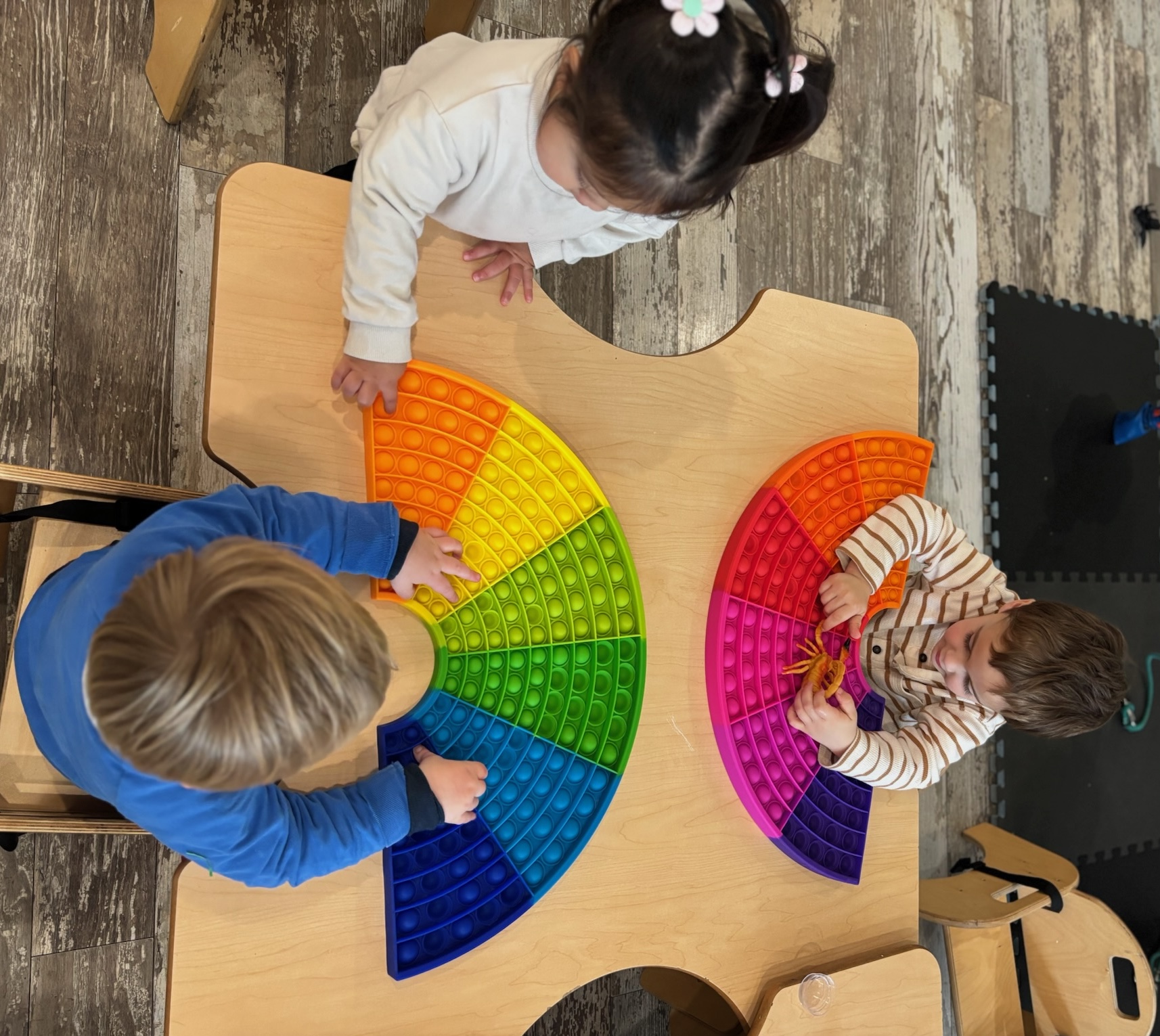
This is where executive function gets built. Puzzles and sorting games teach children to hold a goal in mind, tolerate frustration, and try a different approach when something doesn’t work. That cycle — attempt, fail, adjust, persist — is exactly the cognitive pattern that researchers at NAEYC identify as predictive of long-term academic success.
Fine motor skills develop here too, which matters more than it sounds. Hand-eye coordination and spatial reasoning are tightly linked in early development. The child manipulating puzzle pieces is also building the neural pathways they’ll use for reading and writing.
This is the kind of learning that happens at WeVillage every day — thoughtfully embedded into curriculum, not added on. Explore our programs →
4. Pretend Play and Role-Playing
Pretend play is where social and emotional intelligence develops. When a four-year-old plays “restaurant” or acts out a doctor’s visit, they’re practicing perspective-taking, negotiating rules, managing disappointment, and using language purposefully — all in a low-stakes environment that’s entirely driven by their own imagination.
This kind of play also builds narrative thinking. Children who engage in rich imaginative play tend to develop stronger storytelling abilities and better comprehension skills — both of which have direct downstream effects on reading.
The key is giving children enough unstructured time and space to develop their own scenarios, with adults available to support rather than direct.
5. Outdoor Exploration and Sensory Learning
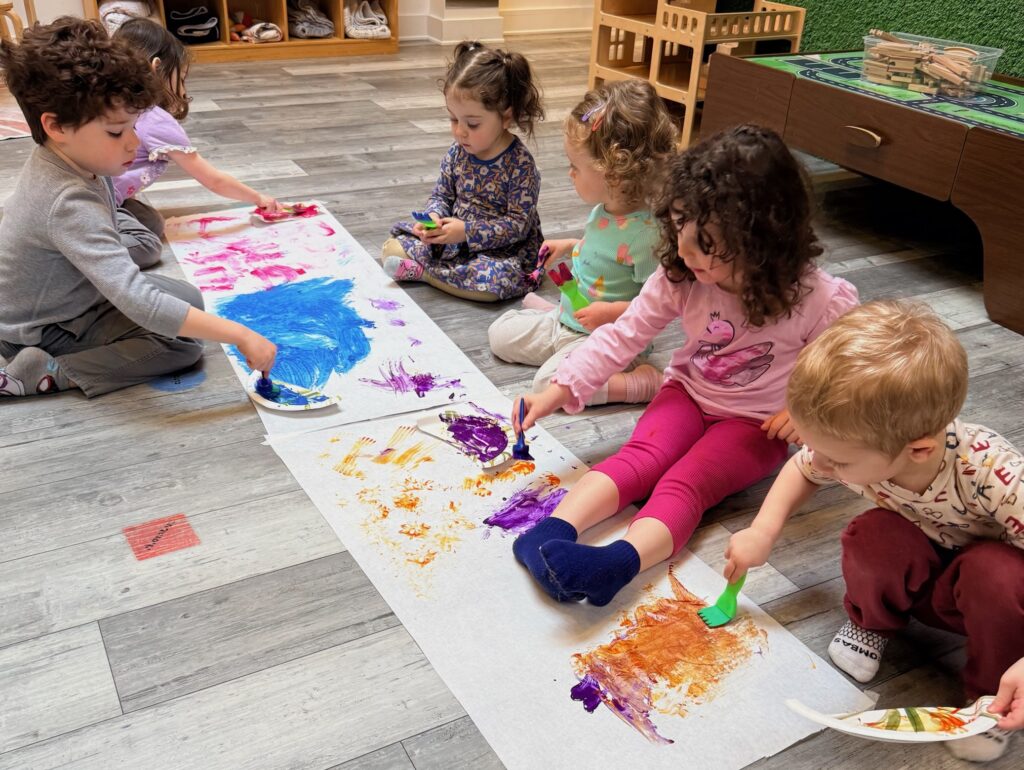
Outdoor and sensory play is one of the most underestimated tools in early education. When children dig, pour, collect, observe, and experiment, they’re engaging multiple sensory systems simultaneously — which is precisely how the brain builds and reinforces neural pathways most efficiently.
There’s also a focus and regulation benefit. Time in natural environments consistently improves children’s ability to sustain attention and manage impulses. For preschool-age children especially, the outdoor environment isn’t a break from learning — it is learning.
How to Evaluate Any Early Education Program
Knowing which activities support preschool brain development is useful. Knowing what to look for in a school is more useful. Here’s a practical filter:
Walk through a classroom mid-morning and ask yourself: are children actively engaged with materials and each other, or are they being managed? Are teachers interacting with children at eye level, asking open-ended questions, extending play? Is there evidence of a real curriculum, not just a theme of the week?
The environments that produce the strongest developmental outcomes aren’t the flashiest. They’re the most intentional — where every activity has a purpose, and every child is known.
Your village is waiting. WeVillage is early education designed for modern families in Sherman Oaks. Schedule a Tour →