Toddlers don’t need perfection — they need predictability. A well-designed toddler care routine does far more than organize your day. It gives your child the neurological foundation they need to regulate emotions, develop language, and build the kind of confidence that carries into the classroom and beyond.
Here’s what the research says, and what it looks like in practice.
1. Routine Creates Emotional Security — Not Just Order
When a toddler knows what comes next, their nervous system relaxes. That’s not a parenting philosophy — it’s developmental science. According to the American Academy of Pediatrics, consistent daily routines support self-regulation, reduce anxiety, and improve sleep quality in children ages one through five.
The effect is cumulative. The more consistently a routine is followed, the more securely a child attaches to their environment — which directly supports social-emotional growth and early learning readiness.
2. A Consistent Toddler Care Routine Shapes How Children Eat and Sleep
Two of the most common early childhood struggles — picky eating and sleep resistance — are often routine problems, not temperament problems.
Regular mealtimes teach the body when to expect nutrition, which reduces grazing and increases appetite at the table. A predictable nap and bedtime sequence — bath, story, quiet, sleep — signals the brain to wind down. Research from Zero to Three confirms that toddlers who follow consistent sleep routines fall asleep faster and wake more rested, with measurable improvements in daytime mood and attention.
Most toddlers between ages one and three need ten to fourteen hours of sleep daily. Protecting that window is one of the highest-leverage things a parent can do.
3. Play Isn’t Just Play — It’s the Curriculum
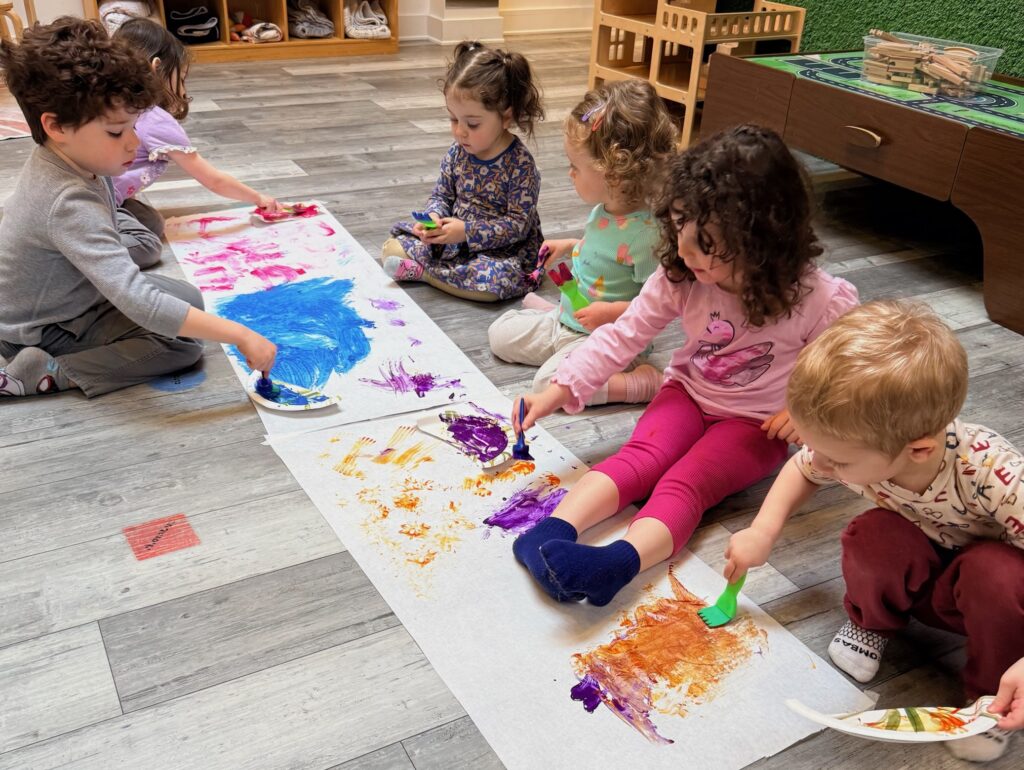
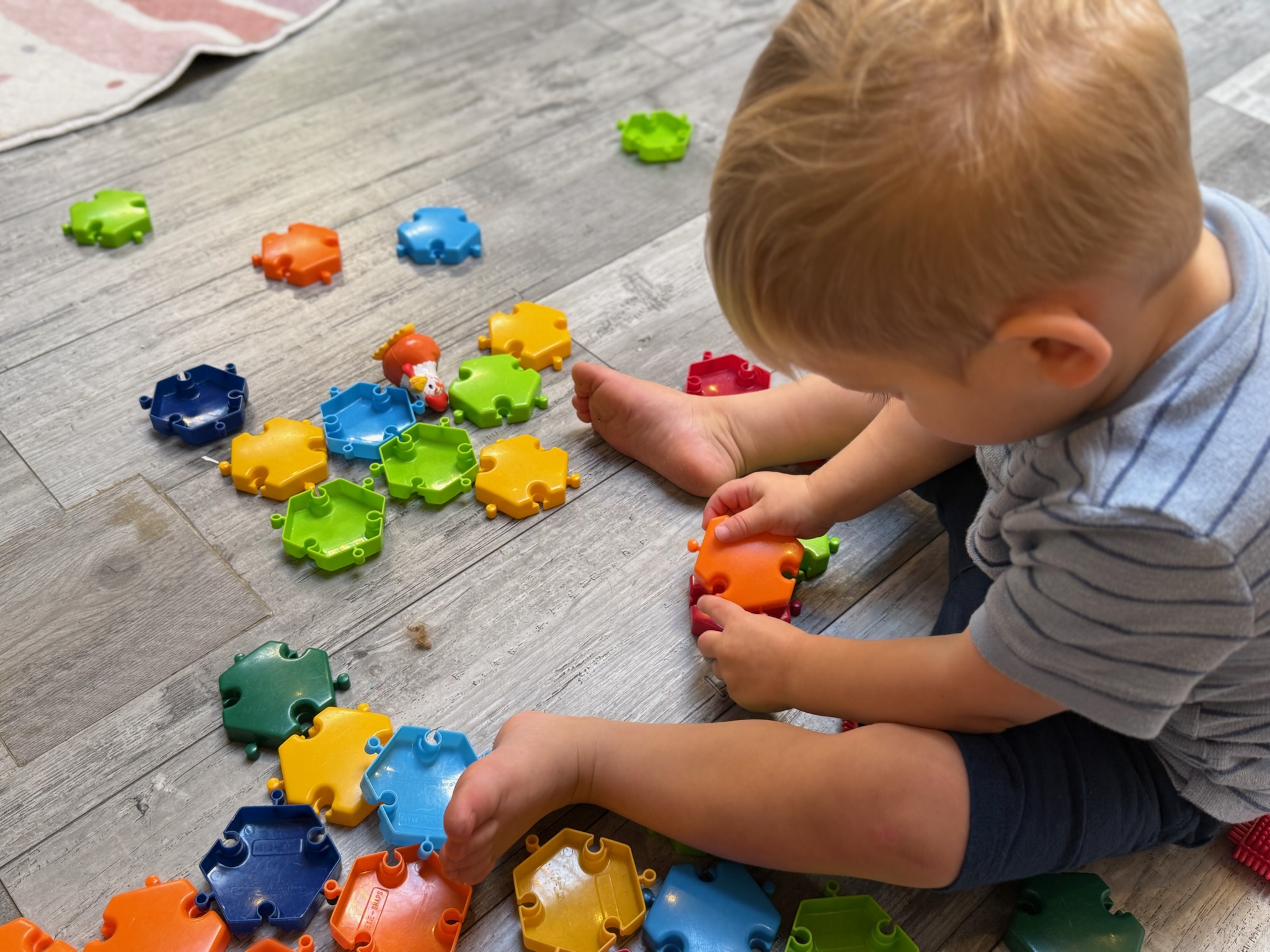
Active, unstructured play is how toddlers process the world. Running, climbing, building, and creating aren’t breaks from learning — they are the learning. Fine and gross motor development, cause-and-effect reasoning, early math and spatial thinking: all of it happens on the floor, in the sandbox, at the art table.
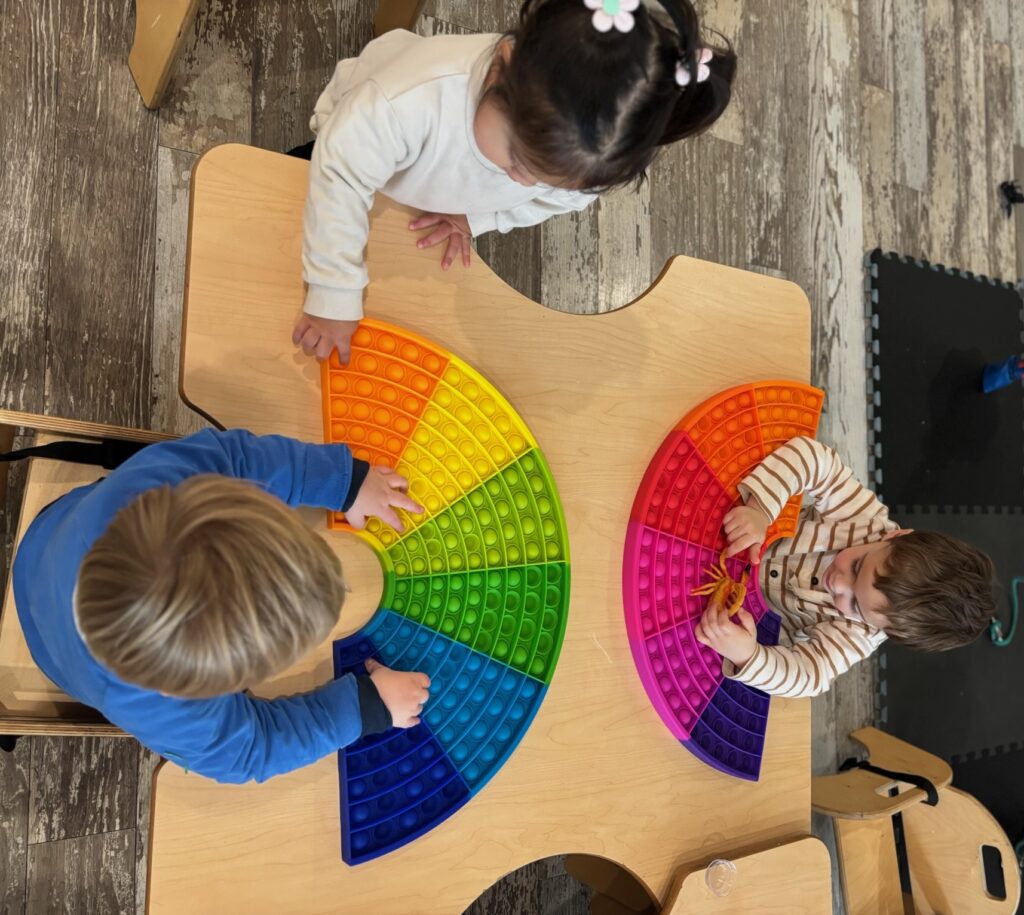
Quiet activities — reading together, simple puzzles, drawing — build complementary skills: focus, early literacy, and creative problem-solving. A balanced toddler activity schedule makes intentional space for both.
This is the kind of learning that happens at WeVillage every day. Explore our programs →
4. Routines Teach the Skills Preschool Requires
Waiting for a turn. Cleaning up before moving to the next activity. Following a transition cue. These aren’t arbitrary rules — they’re the foundational social-emotional skills that determine how smoothly a child adjusts to a structured school environment.
When families and early education programs align on routine, children arrive at preschool already fluent in the rhythms of a classroom. The adjustment is easier. The confidence comes faster. The learning deepens sooner.
5. Transitions Are a Skill You Can Teach
The most common routine breakdown isn’t the routine itself — it’s the space between activities. Moving from outdoor play to dinner, from play to nap, from home to school: these transitions are hard for toddlers because their executive function is still developing.
The fix is simple: give a heads-up. “Five more minutes, then we’re washing hands.” Use a consistent cue — a song, a phrase, a visual timer. Over time, toddlers internalize these signals and the resistance fades. What felt like a behavioral problem was really a skill gap — and routines close it.
What to Look for in a Toddler Routine at Your Child’s Early Education Program
If your child is enrolled — or you’re considering enrollment — ask their program how daily routines are structured. A high-quality early education environment should have consistent mealtimes, protected rest periods, and purposeful transitions between activities.
Families looking for toddler care in Sherman Oaks will find that the best programs don’t just have schedules — they have intentional schedules built around how children actually develop.
Your village is waiting. WeVillage is early education designed for modern families. Schedule a Tour →