The classroom your child walks into every morning isn’t just a backdrop — it’s an active part of how they learn. Research on preschool classroom design is clear: the physical environment shapes attention, confidence, creativity, and social development in measurable ways. If you’re evaluating preschools, the space itself deserves as much scrutiny as the curriculum.
Here’s what the research says — and what to look for.
1. The Room Is the Third Teacher
In both Montessori and Reggio Emilia approaches, the classroom environment is considered a third teacher — one that communicates expectations, invites exploration, and teaches independence without an adult directing every move. A well-designed early learning space doesn’t just hold children; it guides them.
At WeVillage, every room is designed with this principle in mind. Explore our programs to see how our curriculum and environment work together.
2. Natural Light Does More Than You Think
Lighting is one of the most underestimated variables in early education. Natural light supports alertness, mood regulation, and healthy sleep cycles — all of which directly affect a child’s readiness to learn. Classrooms with large windows and thoughtfully adjusted artificial lighting create calmer, more focused environments than fluorescent-heavy rooms.
When you tour a preschool, look up. How much natural light enters the space? Is the lighting warm or harsh?
Ready to see WeVillage in person? Schedule a tour and meet the team.
3. Sound Matters as Much as Sight
Acoustics rarely come up in preschool marketing — but research from the Harvard Center on the Developing Childconfirms that excessive noise raises cortisol levels in young children and impairs language development. Classrooms that use rugs, soft furnishings, and defined zones for different activity types naturally reduce ambient noise and help children focus.
A quiet reading corner is more than cozy. It’s doing developmental work.
4. Child-Scale Furniture Builds Independence
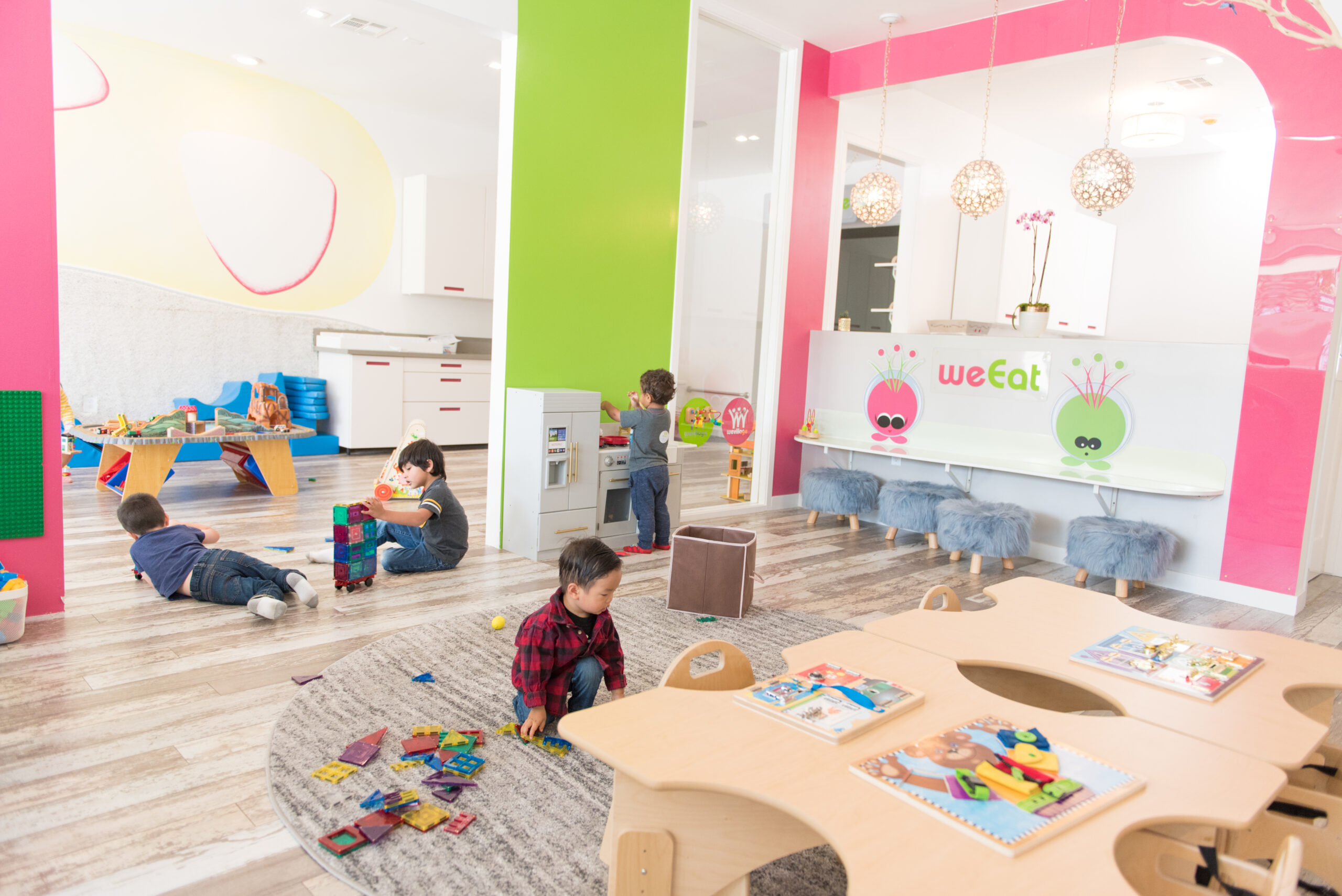
When a child can independently reach their materials, return items to their proper place, and sit comfortably without adult assistance, they’re building executive function and self-regulation — not just physical coordination. Child-scale furniture is a design choice that communicates to a child: this space was made for you.
This is why furniture height, shelf accessibility, and sink placement are worth examining on a school tour, not just the wall displays.
5. Thoughtful Preschool Classroom Design Uses Zones, Not Open Space
An undifferentiated open room can feel chaotic to young children. Classroom zoning — distinct areas for quiet reading, group work, creative play, and physical activity — gives children visual and spatial cues about what’s expected in each part of the room. It reduces behavioral friction and supports longer, more focused engagement.
Look for classrooms where the layout communicates intention. If you can’t tell what different areas of the room are for, neither can a three-year-old.
6. Nature Belongs Inside, Too
Biophilic design — integrating natural materials, plants, textures, and outdoor sight lines — reduces stress and increases creative engagement in young children. It doesn’t require a forest; it requires intention. Wood over plastic. Natural light over fluorescent. A plant on the shelf. A window that opens onto green.
These details are small individually. Together, they create a sensory environment that feels calm rather than stimulating for stimulation’s sake.
7. The Design Reflects the Philosophy
The most telling thing about a preschool classroom is what it says about the adults who designed it. A cluttered, busy room suggests one set of values. A calm, intentional, child-scaled environment suggests another. The Salford University study found that classroom design accounted for up to 16% of variation in student learning progress — which means the space is doing real pedagogical work, whether or not anyone acknowledges it.
When you visit WeVillage’s preschool program, pay attention to the room before you ask a single question. It will tell you a lot.
Your village is waiting. WeVillage is early education designed for modern families. Schedule a Tour →