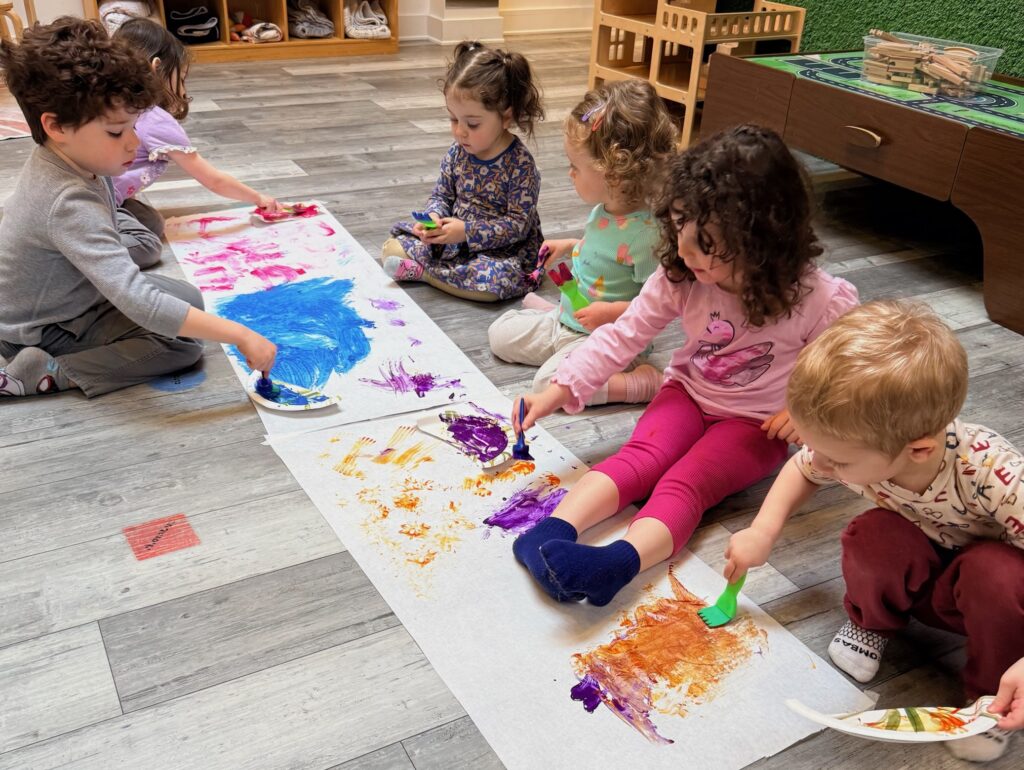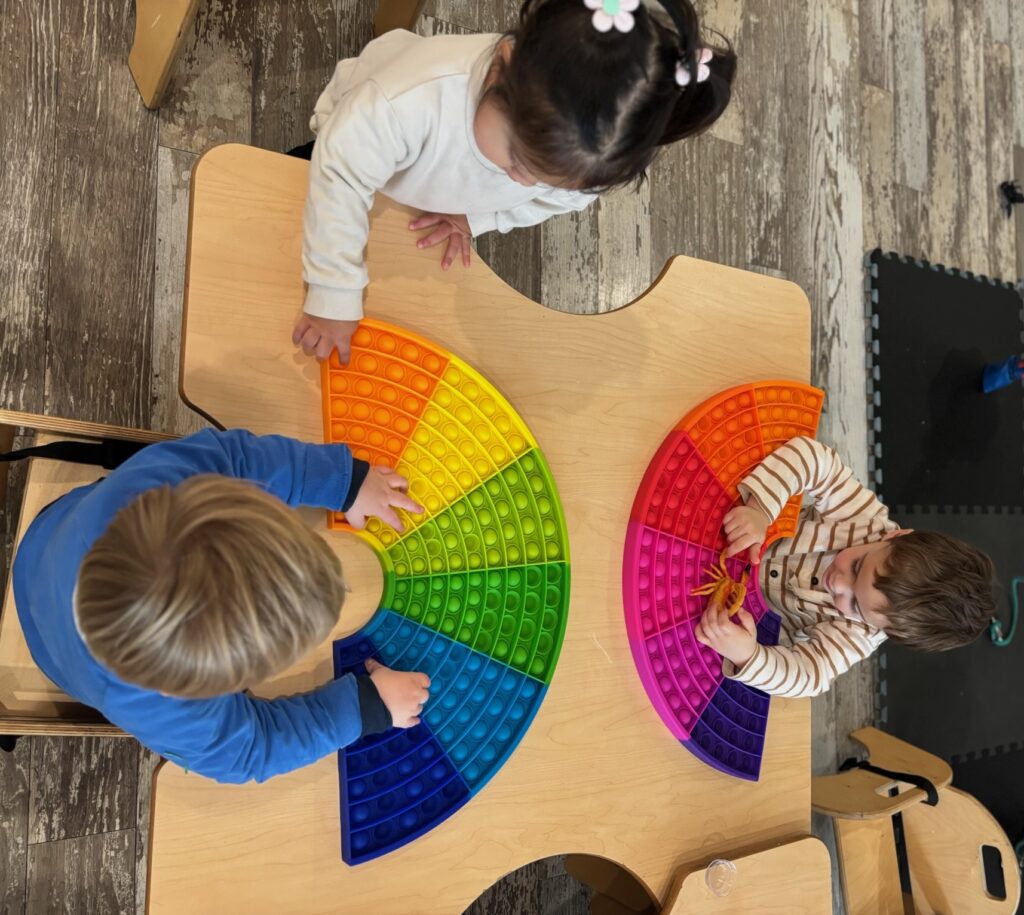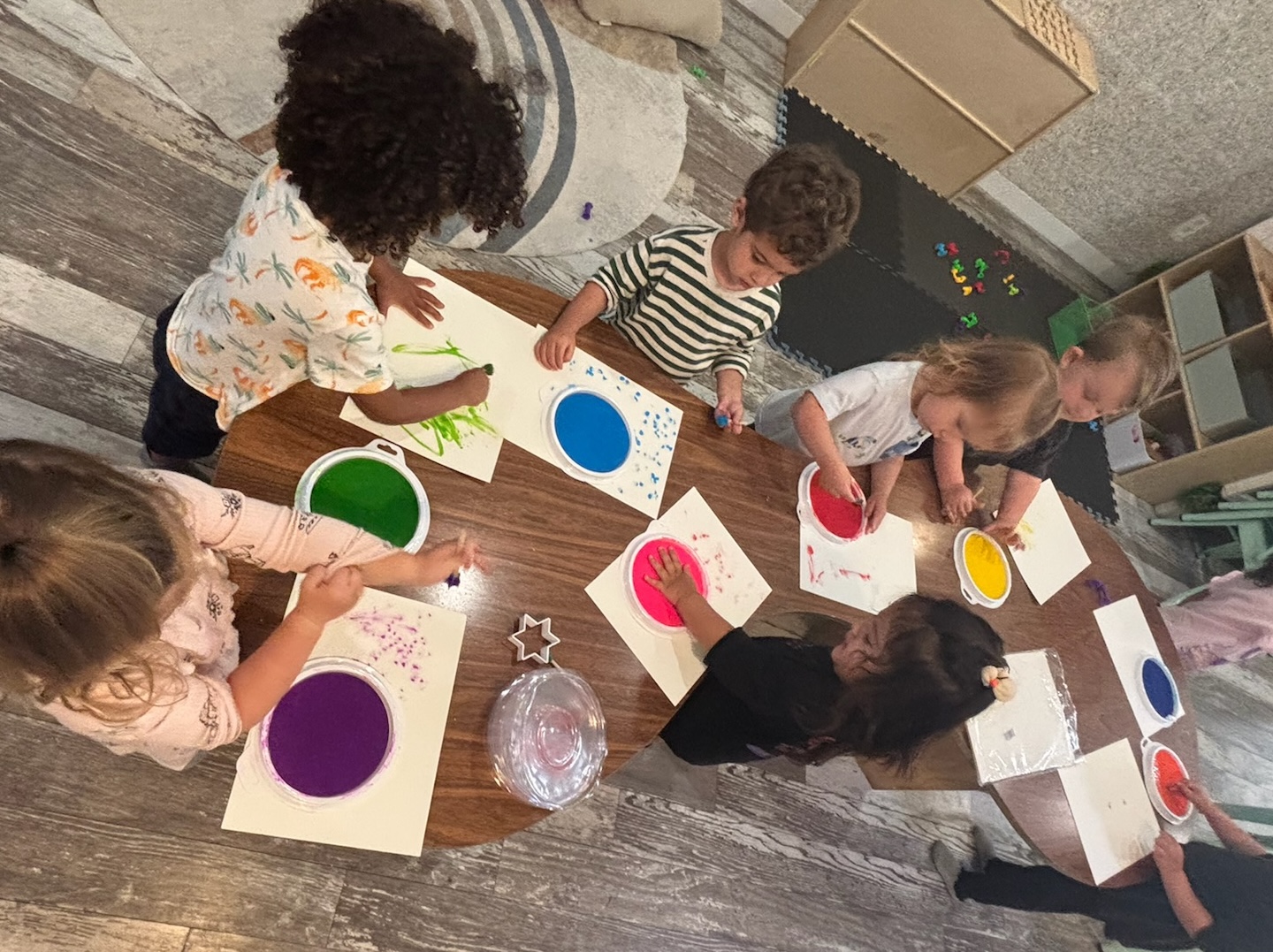
The path to a confident, capable child rarely starts with a workbook. More often, it starts with a paper plate, a pair of child-safe scissors, and a classroom designed to let curiosity lead.
At WeVillage, our approach to early childhood education in Sherman Oaks is built on a foundational truth backed by decades of research: children learn best when they’re doing. One of the most deceptively powerful activities our teachers reach for — a simple Emotion Wheel craft — builds four essential life skills at once. Here’s why it works, and what your child is actually developing while they glue, draw, and create.
The Craft: An Emotion Wheel
Children divide a paper plate into four sections, each representing a different feeling — happy, sad, angry, excited. They draw faces, choose colors, and decorate each section however they like. It looks like an art project. It functions like a developmental milestone.
No right answers. No wrong moves. Just a child constructing something meaningful with their hands — and their whole mind engaged in the process.
What Early Childhood Education in Sherman Oaks Actually Looks Like
The best early learning environments don’t separate “academic” time from “creative” time. They’re the same time. This craft is a clear example of how intentional curriculum design turns a simple activity into a multi-layered learning experience.
Here’s what’s happening beneath the surface.
Skill 1: Fine Motor Development
Every cut, every glue stroke, every carefully drawn eyebrow is training the small muscles that will later support writing, dressing independently, and self-care. Fine motor development in the early years is a well-documented predictor of school readiness, and hands-on creative work is one of the most effective ways to build it — far more so than structured practice drills.
Skill 2: Cognitive Development and Executive Function
To complete this craft, a child has to make a sequence of decisions: which emotion goes where, what colors feel right, what the face should look like, what comes next. That’s planning, sequencing, and problem-solving — the foundations of executive function.
Research from the Harvard Center on the Developing Child confirms that these skills, built in the early years, shape how children approach challenges well into adulthood. A paper plate and some crayons are doing more cognitive work than they appear to be.
Skill 3: Emotional Resilience
Not every craft goes as planned. The glue smears. The face looks different than expected. The child decides to start a section over.
Each of those moments is a micro-lesson in resilience — in tolerating frustration, regulating the response, and finding a way forward. This is emotional development built through low-stakes experience, which is exactly the right environment for it. Children who regularly navigate small setbacks in safe, supported settings develop the self-regulation tools they’ll rely on for years.
Skill 4: Social-Emotional Intelligence
As children work, they talk. “That’s my angry face — I made it when my brother took my toy.” “I made the happy face the biggest because I feel happy most.” These conversations, which emerge naturally during creative work, are how children begin to build emotional vocabulary and practice perspective-taking.
In a group setting, this craft also creates opportunities to listen, take turns, and recognize that other children feel things differently than they do. That’s the beginning of empathy — and it’s happening over art supplies.
This is the kind of learning that happens at WeVillage every day. Explore our programs →
Why Intentional Curriculum Design Matters
A craft project is only as powerful as the environment around it. When teachers know why they’re choosing an activity — what skills it builds, how to extend the learning, how to support a child who gets frustrated — the outcome is fundamentally different than supervised free play.
At WeVillage, every activity in our classrooms is chosen with intention. Our educators understand child development, observe each child closely, and design experiences that meet kids where they are. That’s what separates early education from just keeping children occupied.
If you’re evaluating programs in Sherman Oaks, the question to ask isn’t “what do they do?” It’s “why do they do it?”
Your village is waiting. WeVillage is early education designed for modern families in Sherman Oaks. Schedule a Tour →