The best early education programs don’t resist technology — they use it deliberately. Technology in preschool learning has moved well beyond tablets in the corner. When it’s thoughtfully integrated, it can deepen cognitive development, support teachers, and help every child learn at their own pace.
Here’s what that actually looks like in a high-quality early education environment.
1. It Sharpens Thinking, Not Just Screen Time
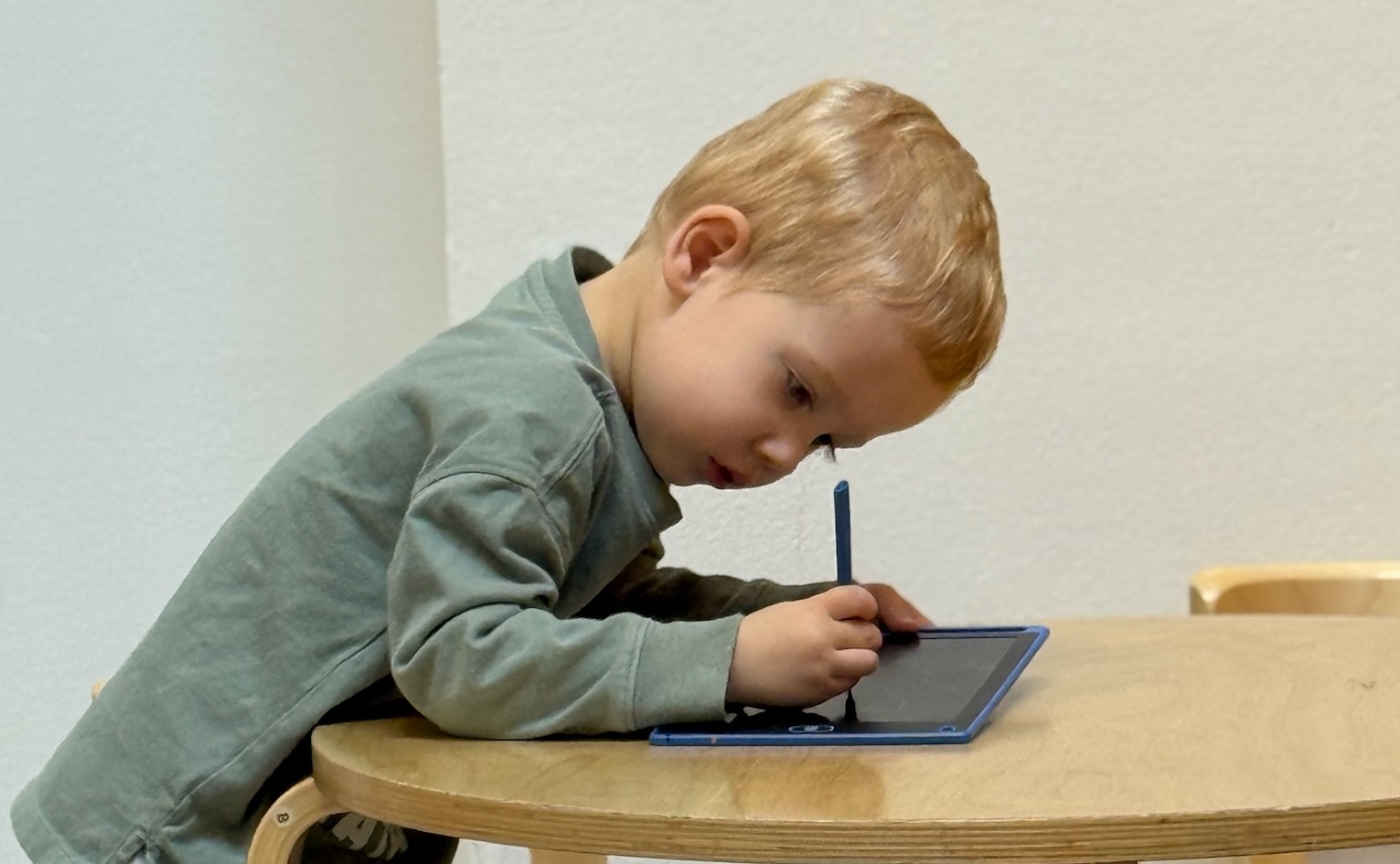
Interactive tools designed for young learners — puzzle apps, sequencing games, guided drawing programs — engage the same cognitive skills as hands-on play: pattern recognition, cause and effect, logical reasoning. The key difference from passive screen time is the interaction. A child dragging shapes into place is problem-solving. A child watching a video is not.
NAEYC’s position on technology in early childhood emphasizes that the quality of the experience matters far more than the tool itself.
2. It Lets Teachers Teach Better
When used well, technology extends what skilled educators can do. Interactive whiteboards support whole-group lessons. Digital documentation tools help teachers track developmental milestones and spot patterns they might otherwise miss. Portfolio apps let families see growth in real time.
This kind of tech use is invisible to children — it’s infrastructure for the adults who guide them.
3. It Supports Every Kind of Learner
Mixed-age classrooms benefit most from adaptive tools. Platforms that adjust content to a child’s pace mean a 3-year-old who’s ahead on letter recognition isn’t waiting for the group, and a child who needs extra repetition gets it without anyone falling behind. That’s personalized learning — not a buzzword, but a real structural advantage.
This is the kind of learning that happens at WeVillage every day. Explore our programs →
4. It Can Deepen Social and Emotional Learning — When Used Right
Cooperative digital games, shared storytelling apps, and turn-based activities can build communication and empathy alongside content knowledge. The condition: a teacher is present, guiding the experience. Technology doesn’t replace that relationship. It creates more opportunities for it.
The American Academy of Pediatrics recommends that any digital media for young children be co-engaged — meaning an adult is involved, not just supervising.
5. Balance Is the Actual Strategy
Thoughtful programs set daily limits, prioritize outdoor and physical play, and treat tech time as one mode among many — not the default. The schools doing this well aren’t talking about screen time as a problem to be managed. They’re designing environments where technology has a specific, intentional role and everything else gets protected space around it.
Parents who ask the right questions about tech use tend to be the same parents who ask the right questions about curriculum, social-emotional development, and teacher training. They belong at WeVillage.
Ready to see how we approach early education? Schedule a tour →
Your village is waiting. WeVillage is early education designed for modern families. Schedule a Tour →