Social development isn’t a soft skill — it’s the foundation everything else is built on. At our preschool in Sherman Oaks, we treat the ability to connect, communicate, and navigate relationships as core curriculum, not an afterthought. The research backs this up: NAEYC’s position on developmentally appropriate practice identifies social-emotional learning as central to school readiness and long-term wellbeing.
Here’s what that actually looks like in practice.
The 5 Social Skills That Take Shape in the Early Years
1. Communicating Needs Clearly
Before children can advocate for themselves, they need language. In the preschool years, kids move from pointing and reacting to finding words for what they want, how they feel, and what they need. At WeVillage, our educators model this daily — through conversation, storytelling, and structured circle time designed to stretch each child’s expressive vocabulary.
This isn’t just nice to have. Harvard’s Center on the Developing Child notes that early language development is one of the strongest predictors of academic and social success.
2. Sharing and Taking Turns
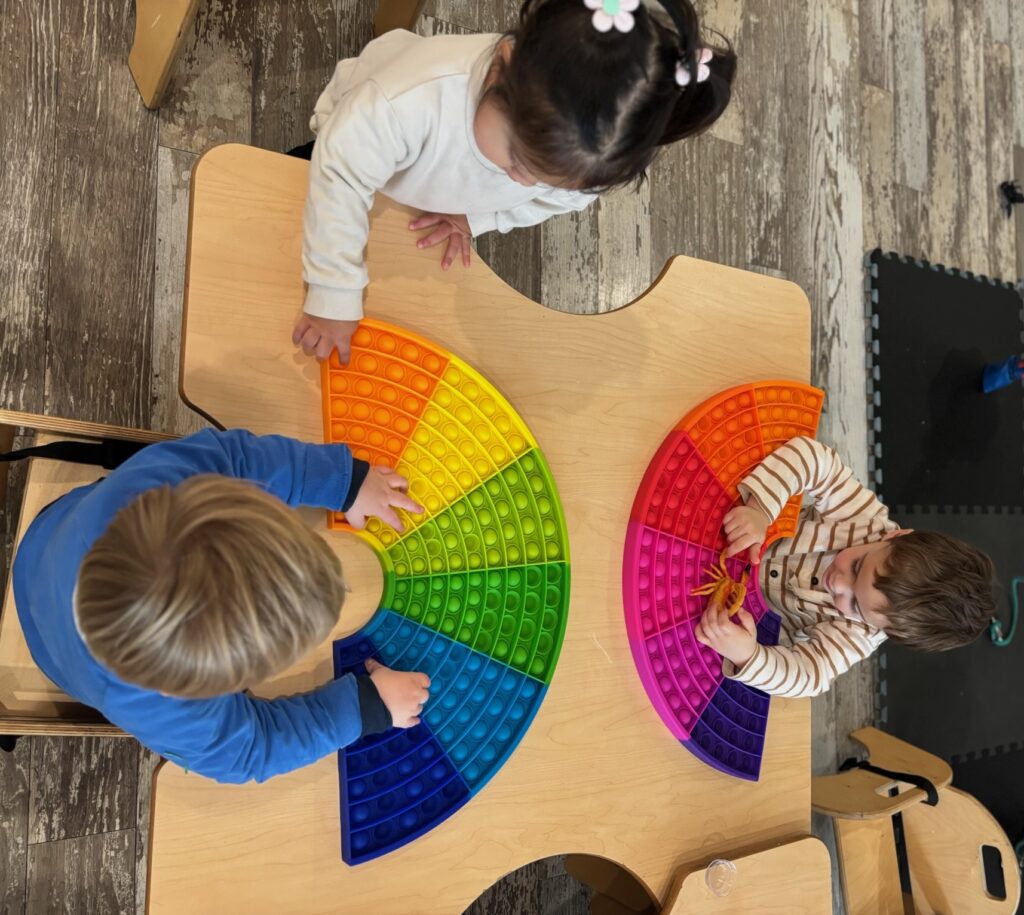
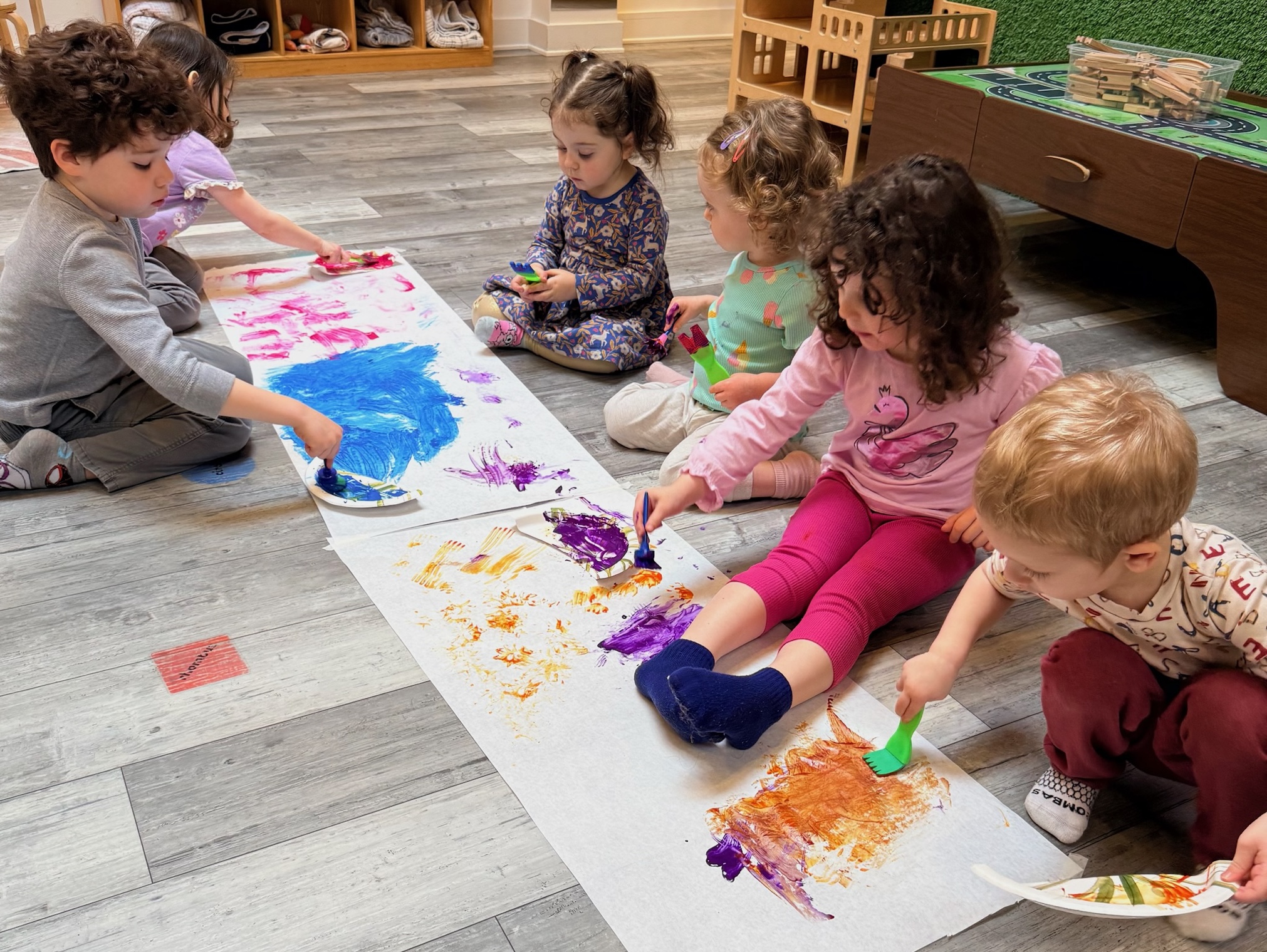
This is the one that challenges every toddler — and every parent. Learning to wait, to share space, and to acknowledge that someone else’s turn matters is a genuinely hard developmental task. Group play, collaborative art, and team-based challenges give children a real context for practicing patience without forcing it.
This is the kind of learning that happens at WeVillage every day. Explore our programs →
3. Listening and Following Directions
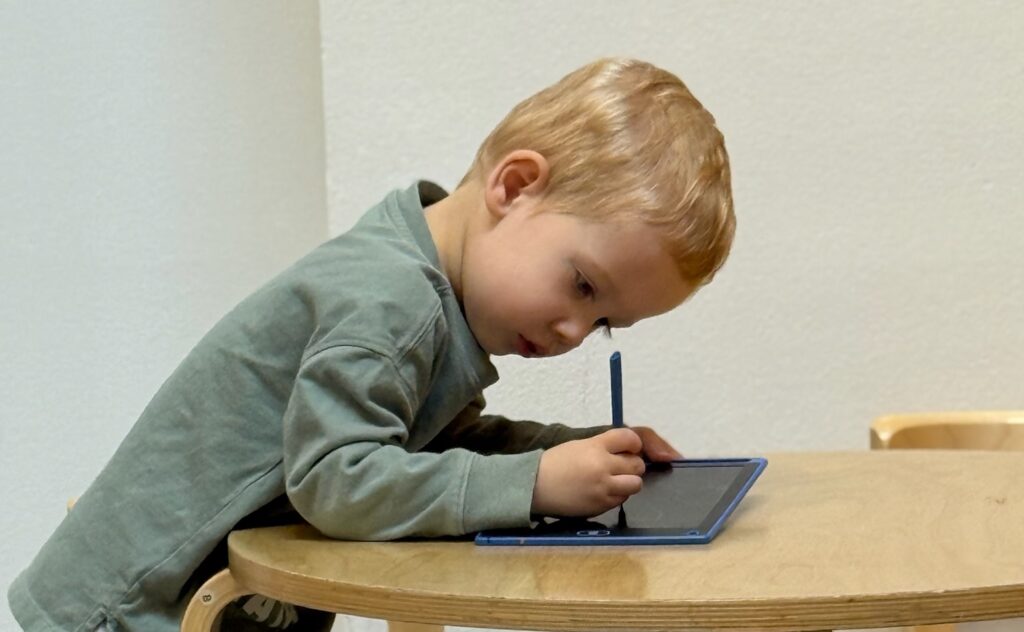
Focus is a skill, not a personality trait. Children who learn to listen — really listen — during preschool build habits that carry into kindergarten and beyond. Structured routines, story time, and predictable classroom rhythms help kids develop the kind of focused attention that makes transitions smoother and learning deeper.
4. Recognizing and Managing Emotions
Preschoolers feel everything at full volume. The goal isn’t to quiet those feelings — it’s to help children name them, understand them, and respond rather than react. Teachers at a quality preschool in Sherman Oaks play a critical role here: when they model calm, label emotions out loud, and respond consistently, children internalize those same tools.
Social stories, imaginative play, and gentle redirection are core parts of how we build emotional intelligence in the classroom.
5. Resolving Conflict Constructively
Disagreements happen. What matters is what children learn from them. Rather than stepping in to resolve every conflict, our teachers guide children through the process: identify the problem, consider the other person’s perspective, find a solution together. This approach builds empathy, agency, and the kind of problem-solving skills that serve children well beyond the early years.
Why This Matters More Than Most Parents Expect
Academic readiness matters — but social readiness is what actually determines how a child experiences school. A child who can manage a disappointment, ask for help clearly, and work alongside a peer who sees things differently is set up to learn. One who can’t yet do those things will spend a lot of classroom time managing emotional overwhelm instead.
This is why social-emotional development isn’t a “bonus” at WeVillage. It’s embedded in how we design the day.
How Families Can Reinforce These Skills at Home
The classroom does a lot of the work. Families do the rest. A few things that make a measurable difference:
Model what you want to see. Children watch how adults handle frustration, disagreement, and disappointment. Narrating your own process — “I’m feeling frustrated right now, so I’m going to take a breath before I respond” — gives children a script they can borrow.
Set up opportunities to practice. Play dates, group activities, and family events all give children a low-stakes environment to work on the same skills they’re building at school. Consistency across settings accelerates development.
Stay in communication with teachers. At WeVillage, we observe each child’s social development closely and share what we’re seeing with families — including both the wins and the areas we’re working on together.
Your village is waiting. WeVillage is early education designed for modern families in Sherman Oaks who expect both warmth and rigor. Schedule a Tour →